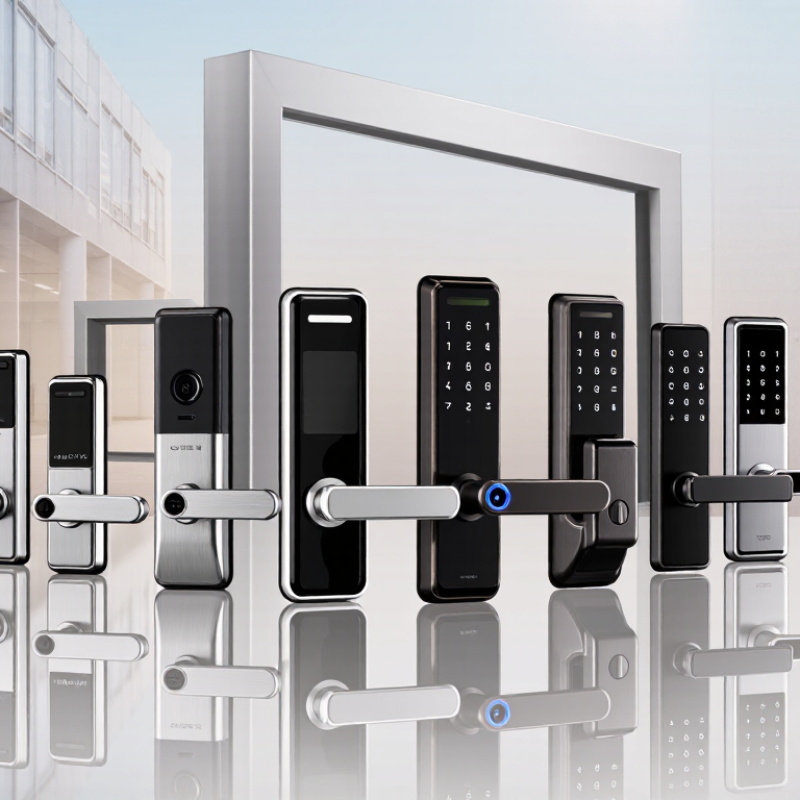
2026 Top Wireless Lock Manufacturers for Global Buyers

Choosing the right Wireless Lock manufacturer is no longer a simple price comparison.

Global buyers must examine security design, battery endurance, software stability, installation quality, and long-term support. A polished product photo proves very little. The real test begins when a lock faces cold mornings, weak signals, repeated access requests, or a drained battery.

Professor Ross Anderson, a leading security engineering authority, stated, “Security is a process, not a product.” This principle strongly applies to Wireless Lock systems. Reliable manufacturers treat protection as an ongoing responsibility. They update firmware, document vulnerabilities, test communication protocols, and provide clear recovery procedures. They also explain what happens when connectivity fails.

This guide reviews leading manufacturers for international buyers through a practical, evidence-based lens. It considers factory experience, technical expertise, product certifications, integration capabilities, warranty terms, and customer feedback. Where possible, evaluation should include product demonstrations, installation records, and independent testing results. Claims without evidence deserve caution.

No ranking is perfect. Markets change quickly.

A manufacturer may offer excellent hardware but weak cloud support. Another may provide advanced software but limited regional service. These differences matter in hotels, offices, apartments, warehouses, and controlled commercial facilities. Buyers should compare actual operating conditions, not only feature lists.

The following selection aims to clarify those trade-offs. It is designed for decision-makers who need dependable access control, transparent supplier information, and a realistic view of Wireless Lock performance across global markets.

2026 Top Wireless Lock Manufacturers for Global Buyers

What Wireless Locks Are and How They Work

Wireless locks replace a traditional key with a digital credential. They may use Bluetooth, Wi-Fi, radio frequency, or a combination of these methods. A credential can be stored on a phone, keypad, access card, or remote control.

Inside the lock, a reader receives the credential and sends it to a control circuit. The system checks permission, time limits, and sometimes access history. If the data matches, a small motor moves the deadbolt or latch. Many models encrypt communication and record each opening event. Some connect to a gateway for remote management. Others work locally when the network is unavailable.

Power matters. Most wireless locks use batteries, so low-power warnings and emergency access deserve careful attention. A metal door, thick wall, or poor installation can weaken the wireless signal. This is easy to underestimate. During site checks, installers should test the lock from several angles and measure battery performance under normal use. A backup power option can prevent an avoidable lockout.

Wireless does not mean risk-free. Shared passwords, outdated firmware, and careless user permissions can reduce protection. Administrators should remove lost credentials quickly and review access logs regularly. Buyers should also verify regional radio requirements, data practices, weather resistance, and compatibility with existing doors. The technology is practical, but the installation details often decide whether it performs reliably.

Key Criteria for Comparing Wireless Lock Manufacturers

When comparing wireless lock manufacturers in 2026, global buyers should look beyond product appearance. A polished demo proves little. Ask for documented field experience, installation records, and failure-rate data from similar buildings. A manufacturer with practical experience can explain signal loss through concrete walls, battery behavior in cold rooms, and recovery steps after a network outage.

Technical evidence matters. Check encryption methods, firmware update controls, user-permission settings, and audit-log protection. Request independent test reports and clear information about radio performance. The lock should support the required frequency range and regional communication requirements. Review battery tests under realistic conditions, not only laboratory temperatures. A useful sample can reveal loose covers, delayed alerts, or awkward keypad access.

Support quality often separates reliable suppliers from ordinary ones. Compare response times, spare-part availability, training materials, warranty terms, and repair procedures. Ask whether software integrates with existing access systems through documented interfaces. Inspect the manufacturer’s quality controls, supplier traceability, and production inspection records. Transparent answers build confidence.

Some weaknesses may remain. No wireless system performs perfectly in every building. Signal surveys, backup entry methods, and clear maintenance schedules reduce that risk. Buyers should also request a pilot installation with several doors and real users. Test it during busy periods, power interruptions, and routine battery changes. A manufacturer that welcomes these tests usually understands accountability, although even strong technical teams can overlook small daily-use problems.

2026 List of Leading Wireless Lock Manufacturers Worldwide

The 2026 list of leading wireless lock manufacturers worldwide reflects a shift toward safer, connected access systems. Experienced manufacturers now combine electronic locking, mobile credentials, and dependable mechanical overrides. Their products serve hotels, offices, apartments, warehouses, and private facilities. Strong suppliers publish clear specifications for battery life, wireless range, weather resistance, and emergency power options. Details matter.

Reliable manufacturers also document testing procedures and installation limits. Look for evidence of controlled quality checks, firmware update policies, data protection practices, and compliance with recognized regional standards. A lock should still operate smoothly after repeated use, temperature changes, and temporary network loss. Test it twice. Field experience often reveals weaknesses that product brochures hide, especially around door alignment, latch friction, and battery replacement access.

Leading global suppliers usually support multiple communication methods, including Bluetooth, Wi-Fi, NFC, or secure gateway connections. Their technical teams provide wiring diagrams, mobile software guidance, and maintenance schedules for installers. Local service coverage is equally important, since delayed replacement parts can stop an entire access system. However, no worldwide list is flawless. Market rankings can favor visibility over durability, while smaller manufacturers may offer stronger engineering in specific climates or building types. Buyers should compare verified test records, warranty terms, integration support, and real installation feedback before selecting a supplier. A polished interface is useful, but dependable unlocking matters more.

2026 Wireless Lock Technology Reference for Global Buyers

Typical maximum indoor communication range of major wireless technologies used in connected locking systems

The comparison uses published technology-level range references rather than company or brand performance data. Actual wireless-lock range varies with building materials, antenna design, interference, transmission power, network topology, and regional regulations. Buyers should verify the tested range and certification of each product before procurement.

Reference sources: Bluetooth SIG technology overview; Thread Group overview; Connectivity Standards Alliance Zigbee overview; Z-Wave specification overview.

Product Types, Security Features, and Smart Access Functions

2026 Top Wireless Lock Manufacturers for Global Buyers

Product Types, Security Features, and Smart Access Functions

Wireless locks now serve homes, offices, hotels, warehouses, and shared facilities. Common types include keypad deadbolts, fingerprint handles, RFID cabinet locks, and app-controlled cylinders. Each design suits a different entry pattern. A warehouse may need durable keypad access, while a rental property may benefit from temporary mobile codes. Buyers should verify installation depth, door thickness, battery life, and local certification before ordering.

Security depends on more than the locking motor.

Look for encrypted communication, tamper alerts, failed-entry limits, and detailed access logs. A mechanical override can help during a dead battery, but it also needs careful key control. In field evaluations, moisture around an outdoor keypad often causes more trouble than software. An appropriate IP rating matters. So does a clear battery warning.

Smart access functions can include remote unlocking, scheduled permissions, one-time codes, user removal, and real-time notifications.

Some systems connect with building management platforms through documented APIs. Privacy settings deserve equal attention, especially when logs record names, times, and locations. No wireless lock is perfect. A stronger feature can create a new weakness if configured poorly. I still question products that promise effortless security without explaining offline operation, firmware updates, or recovery procedures. Test these functions with a nearly empty battery and weak network signal. That is where attractive specifications become practical evidence.

Global Buying Factors: Compliance, Support, Pricing, and Delivery

For global buyers, wireless lock selection should begin with compliance, not appearance. Grand View Research estimated the smart lock market at USD 2.18 billion in 2023, with a projected 19.6% CAGR from 2024 to 2030. Fast growth increases supplier risk. Verify radio approvals, encryption claims, access-log controls, and testing against relevant standards, including EN 14846 and ETSI requirements. Ask for current certificates, not screenshots.

Support quality often decides the real cost. Require installation manuals, firmware procedures, spare-unit policies, and response times in writing. A practical supplier should explain battery behavior in cold storage rooms and crowded apartment corridors. The batteries failed early once. That lesson matters. Remote diagnostics can reduce site visits, but only when support staff understand local networks and privacy obligations. Deloitte’s 2024 Connected Consumer Survey also highlights rising consumer concern about personal-data security, making retention policies worth checking before purchase.

Pricing needs a complete landed-cost model. Include gateways, software subscriptions, customs charges, training, replacement cylinders, and delivery insurance. A lower unit price can hide expensive integration work. Delivery promises should state production time, inspection points, shipping method, and contingency stock. The World Bank’s Logistics Performance Index 2023 shows meaningful differences in customs and delivery reliability between markets. Request sample tracking records and a small pilot order. Global buying is rarely perfect; testing reveals more than polished specifications.

2026 Top Wireless Lock Manufacturers for Global Buyers - Global Buying Factors: Compliance, Support, Pricing, and Delivery
Global buyer comparison framework for evaluating wireless lock manufacturers without displaying company or brand-specific data
Evaluation Factor Recommended Global Benchmark Typical Evidence to Request Buyer Consideration Priority
Wireless Connectivity Bluetooth Low Energy 5.0 or later; optional Wi-Fi, Zigbee, Z-Wave, or Thread gateway support Wireless protocol specification, interoperability test results, gateway documentation, and range data under open-air and building conditions BLE is suitable for local mobile access, while Wi-Fi or a gateway is generally required for remote monitoring and cloud administration High
Regional Radio Compliance Applicable approvals for the destination market, such as FCC requirements in the United States and CE/RED requirements in the European Union Declaration of Conformity, test reports, radio-module approvals, and product labeling samples Approval requirements vary by radio technology and destination country; buyers should confirm that certificates cover the final assembled lock High
Material and Chemical Compliance RoHS and REACH documentation for products entering applicable European and international supply chains Material declarations, restricted-substance test reports, supplier declarations, and compliance statements for batteries and electronics Compliance documentation should match the exact product version, including coatings, circuit boards, batteries, and packaging materials High
Mechanical Security Hardened lock body, protected cylinder or latch mechanism, anti-tamper construction, and documented endurance testing Mechanical drawings, cycle-test results, security test reports, ingress-protection data, and samples for independent inspection Electronic access control does not replace mechanical security; the lock should be assessed for forced entry, wear, and emergency override risks High
Weather and Environmental Resistance Indoor models commonly target IP20–IP44; outdoor models should generally be evaluated at IP55 or above according to installation conditions IP test report, operating-temperature range, corrosion-resistance results, sealing design, and outdoor installation instructions IP ratings indicate protection against dust and water under test conditions but do not guarantee performance in every climate or installation environment High
Power and Battery Performance Low-power operation, replaceable batteries, low-battery alerts, mechanical or external emergency power backup, and clear battery-life assumptions Battery-life test conditions, standby-current data, low-voltage behavior, emergency-unlock procedure, and approved battery specifications Advertised battery life depends on access frequency, wireless activity, temperature, battery chemistry, and connected gateway usage High
Data Security and Access Management Encrypted communication, authenticated firmware updates, role-based administration, audit logs, and secure credential provisioning Security architecture summary, encryption methods, update policy, vulnerability-reporting process, privacy documentation, and penetration-test summary where available Buyers should confirm who controls cloud data, how credentials are revoked, and whether the product can operate securely if cloud service access is interrupted High
OEM and ODM Capability Documented customization process for housing, firmware, mobile applications, packaging, language support, and access-control integrations Product-change procedure, engineering resources, sample approval workflow, firmware-release process, and integration documentation Customization can increase tooling, certification, testing, and minimum-order requirements; changes should be frozen before mass production Medium
Indicative Pricing Structure Entry-level electronic locks often fall around US$25–60 per unit; connected or commercial models commonly range from US$70–250 or more before logistics and integration costs Tiered quotation, tooling charges, certification costs, software or cloud fees, sample charges, packaging costs, and payment terms Unit price alone is not a complete comparison; total landed cost may include gateways, subscriptions, spare parts, compliance testing, and after-sales service High
Minimum Order Quantity Standard products may support lower initial quantities, while customized hardware or firmware often requires higher project volumes MOQ by model, color, finish, packaging version, firmware configuration, and annual purchase commitment Ask whether mixed-model orders are permitted and whether pilot quantities can be converted into a production order without duplicate setup costs Medium
Sample and Pilot Lead Time Approximately 7–21 days for standard samples; customized samples may require several additional weeks depending on tooling and firmware work Sample schedule, engineering-change timeline, testing milestones, approval sign-off process, and sample-to-production transition plan A written pilot plan reduces the risk of shipping a product that has not been verified with the buyer’s door types, mobile platforms, or access-control system High
Mass-Production Delivery Common production lead times are approximately 30–60 days after order confirmation for standard models; customized programs may take longer Capacity plan, production schedule, component availability, inspection points, shipment window, and delay-escalation procedure Lead time should be measured from approved specifications and deposit receipt, not from the first quotation date High
Quality-Control Process Incoming-material inspection, in-process testing, final functional testing, traceability, and documented sampling standards Quality manual, inspection checklist, batch records, serial-number system, corrective-action reports, and pre-shipment inspection options Testing should cover unlocking, locking, battery voltage, wireless communication, emergency override, firmware version, and cosmetic quality High
Warranty and Spare-Parts Support Clearly defined commercial warranty, replacement process, spare-unit policy, and availability of critical mechanical and electronic parts Warranty terms, failure-rate reporting, RMA procedure, spare-parts price list, repair instructions, and service-level commitments Global buyers should clarify whether warranty support is handled remotely, through regional service partners, or by return shipment to the manufacturing location High
Software and Firmware Support Documented firmware-update method, mobile operating-system support, API or SDK availability where required, and a defined end-of-life policy Compatibility matrix, release notes, API documentation, update security policy, cloud-service terms, and support-response targets Long-term software support is essential for connected locks because discontinued applications or cloud services can reduce the usable life of the hardware High
International Logistics Export packaging suitable for electronic and mechanical components, documented HS-code guidance, and shipping options by air, sea, or courier Packing specification, carton dimensions, gross weight, battery transport documentation, Incoterms, export records, and shipment tracking process Locks containing lithium batteries may require additional transport documentation and carrier restrictions; confirm requirements before booking shipment Medium
Buyer note: Pricing, lead times, certification scope, and support conditions are indicative industry benchmarks rather than company-specific offers. Final verification should be completed against the exact model, destination market, installation environment, order quantity, and contract terms.

Article Source:

REQUEST FOR PORPOSAL

Bring the essence of Current to your space! Whether you envision a cozy coffee kiosk, a stylish window café, a dynamic coffee bar, or a multi-station coffee drive-through, the possibilities are endless.  Please fill out the form below to submit your proposal request. Our team will review your information and get back to you shortly.