2026 Best Autonomous Forklift Models for Your Business Needs?
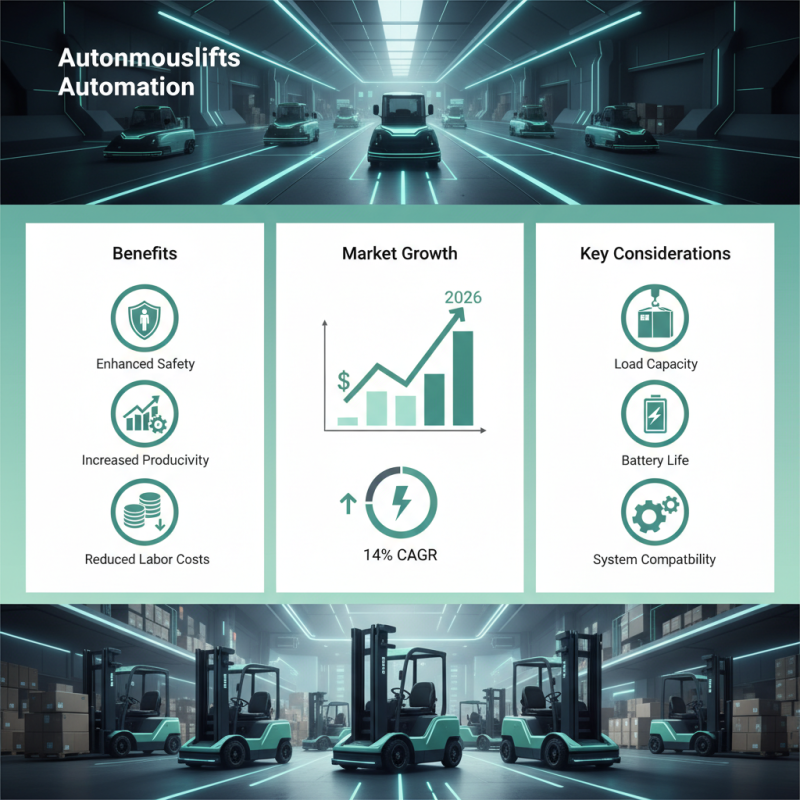
In recent years, the demand for Autonomous Forklifts has surged as businesses seek efficiency and cost savings. According to a report by Research and Markets, the global autonomous forklift market is projected to reach $10.38 billion by 2026, reflecting a compound annual growth rate (CAGR) of over 14%. This growth highlights the increasing reliance on automation in warehouse operations and material handling.
These advanced machines offer numerous benefits, such as enhanced safety, increased productivity, and reduced labor costs. Companies are recognizing that investing in Autonomous Forklifts can significantly optimize their supply chain. However, while these forklifts minimize human error, they are not infallible. Businesses must ensure they have adequate training and support systems in place.
Choosing the right model is critical. Factors like load capacity, battery life, and compatibility with existing systems should influence the decision. As automation becomes more prevalent, it is essential to stay informed about the latest technologies and models. With the right Autonomous Forklift, companies can navigate the complexities of modern logistics more effectively.
2026 Overview of Autonomous Forklift Technology Advancements
The landscape of autonomous forklift technology is evolving rapidly. Advances in sensors and AI drive higher efficiency and safety. New models utilize 3D and LiDAR technology. They navigate complex environments with precision. This allows for effective warehouse management and reduced human error. Autonomous forklifts now integrate seamlessly with software systems. They communicate in real time, sharing data about inventory levels and operational status.
However, challenges remain. Not every business feels ready to adopt this technology. Some companies worry about upfront costs and training. The integration of autonomous systems can disrupt workflows. Employees might resist changes, leading to pushback. A smooth transition requires thorough planning and communication. Training is essential to ensure staff can work alongside these machines.
The ongoing development places emphasis on adaptability. Future models promise enhanced capabilities, potentially empowering smaller businesses. Customization is becoming a focus, allowing tailored solutions for unique challenges. Understanding the balance between human and machine will be crucial. As we explore these advancements, critical reflections on effectiveness will shape the future.
2026 Best Autonomous Forklift Models for Your Business Needs
| Model | Load Capacity (lbs) | Battery Life (hours) | Navigation Type | Safety Features | Price Range ($) |
| Model A | 5000 | 8 | Lidar | Emergency Stop, Obstacle Detection | 30,000 - 35,000 |
| Model B | 4000 | 10 | Magnetic | Proximity Sensors, Safety Lights | 25,000 - 30,000 |
| Model C | 6000 | 12 | Vision-based | Auto Braking, RFID Tags | 35,000 - 40,000 |
| Model D | 5500 | 9 | Hybrid | Lift and Tilt Sensors, Emergency Radar | 28,000 - 33,000 |
Key Features to Look for in 2026 Autonomous Forklift Models
When considering autonomous forklifts in 2026, it's essential to focus on key features that enhance efficiency. One major aspect is the navigation system. Advanced models utilize LIDAR technology, which allows precise mapping of warehouse environments. This enables better obstacle detection, reducing the risk of accidents.
Another critical feature is load capacity. Forklifts should be designed to handle specific weights safely. An ideal choice can lift anywhere from a few hundred to several thousand pounds. It's important to match this capacity with your business needs. Additionally, battery life plays a significant role. Models with longer battery life reduce downtime and allow for extended operation.
User-friendliness is often overlooked. A complex interface can lead to mistakes. Simple, intuitive controls are vital. Training staff should not take long. On the downside, reliance on technology can pose challenges. Unexpected malfunctions can disrupt operations and require backup plans. Regular maintenance is non-negotiable to ensure reliability. Lastly, consider the integration of data analytics. It can help monitor performance and identify inefficiencies.
2026 Best Autonomous Forklift Models - Key Features Comparison
Comparative Analysis of Top Autonomous Forklift Brands in 2026
The landscape of autonomous forklifts is rapidly evolving. In 2026, many brands offer advanced models designed to enhance efficiency and safety in material handling. Each model comes with unique features tailored for different business needs. Some have impressive navigation systems while others focus on load capacity or speed.
When evaluating these models, it’s important to consider your specific operational requirements. A key factor is the environment in which the forklifts will operate. For example, indoor warehouses may benefit from models equipped with precise obstacle detection. Meanwhile, outdoor environments may require durability against the elements. Cost-efficiency should not be overlooked, as advanced technology can come with significant maintenance considerations.
Some businesses find that integrating autonomous forklifts into their existing systems can create challenges. The initial setup and training may strain resources. It's crucial to reflect on whether the potential gains outweigh these initial hurdles. Additionally, feedback from employees can shed light on practical usability and ease of integration, helping businesses make informed decisions about these innovative machines.
Industry Statistics on Autonomous Forklift Adoption Rates and Benefits
The adoption of autonomous forklifts in various industries is on the rise. Recent statistics reveal that nearly 45% of warehouses have integrated some level of automation by 2023. The logistics sector particularly benefits from these advancements. Autonomous forklifts reduce operational costs by up to 30%. This efficiency leads to higher productivity rates, with some facilities reporting up to 25% increase in throughput.
Workforce safety is another critical advantage. According to studies, automated systems can decrease workplace accidents by 70%. This drastic reduction is crucial given that material handling is one of the leading causes of injury in warehouses. The reliance on technology enhances operational reliability, yet it poses challenges. Companies must invest in staff training and adapt to new workflows. Integrating this technology requires careful planning and consideration.
Despite the benefits, not all facilities are ready for full automation. Some organizations struggle with infrastructure upgrades and costs of implementation. A recent report indicates that about 40% of businesses are hesitant due to these factors. Additionally, maintaining a balance between human labor and automation can be difficult. Companies need to evaluate their specific needs before making a leap into autonomous systems. This ongoing reflection will inform their approach toward a fully integrated automated future.
Cost-Benefit Analysis: Investing in Autonomous Forklifts for Your Business
Investing in autonomous forklifts can dramatically enhance operational efficiency. According to a report by the Material Handling Industry, businesses can see a reduction in labor costs by up to 30% when integrating these technologies. This translates to significant savings over time, particularly for warehouses operating 24/7. While the upfront costs are substantial, the long-term gains often justify the initial investment.
However, it is essential to consider potential challenges. Some companies report that the transition period can be disruptive. Employees may require retraining to work alongside autonomous systems. A study from the Warehouse Efficiency Standards Association indicates that insufficient training could lead to a 15% decrease in productivity during the adjustment phase.
Moreover, maintenance and technical support for these systems can also add to operational costs, making a comprehensive cost-benefit analysis critical.
In addition, the reliability of autonomous forklifts needs attention. While designed for efficiency, technical failures can impact productivity. Industry insights suggest that around 10-15% of autonomous units may require unscheduled maintenance in their first year. Companies must weigh the benefits against these potential pitfalls for a successful implementation. Understanding the real-world implications helps in making informed choices.