


China Best Handicapped Electric Wheelchair Suppliers?
Choosing China’s best Handicapped Electric Wheelchair suppliers requires more than comparing prices or product photos. A dependable supplier should demonstrate engineering capability, user-centered design, quality control, and responsible after-sales support. The World Health Organization and UNICEF reported in their 2022 Global Report on Assistive Technology that more than 2.5 billion people need at least one assistive product worldwide. This number may reach 3.5 billion by 2050. Electric wheelchairs are part of this growing need, especially for users managing limited strength, balance, or long-distance mobility.
Real performance appears in practical details. A stable wheelchair should handle ramps, narrow doorways, uneven pavement, and repeated daily transfers. Suppliers should provide battery specifications, motor ratings, maximum user weight, braking performance, and maintenance guidance. Compliance with relevant standards, including ISO 7176 wheelchair testing principles, can offer stronger evidence than marketing claims. Buyers should also examine factory audits, inspection records, spare-parts availability, and warranty response times. A polished catalog is not proof of reliability.
This guide compares leading Chinese manufacturers through these measurable factors. It considers customization, export experience, product testing, technical communication, and user safety. The WHO wheelchair provision guidance also stresses proper assessment, fitting, training, and follow-up. That point is often overlooked. A low-cost model may become expensive when batteries fail or replacement controllers are unavailable. Supplier rankings are useful, but they are not absolute. Actual suitability depends on terrain, climate, body dimensions, transport needs, and clinical recommendations. The best choice is not always the cheapest one. Sometimes, more questions are necessary.
What Are Handicapped Electric Wheelchairs?
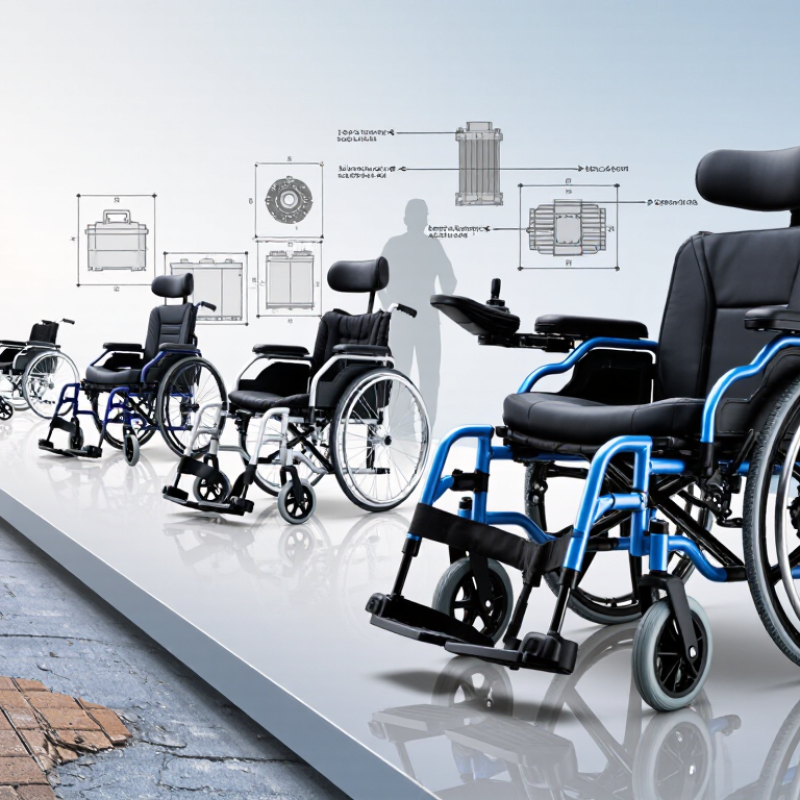
A handicapped electric wheelchair is a powered mobility device for people who cannot walk safely or efficiently. It uses rechargeable batteries, electric motors, and a control system to move the chair. The user may guide it with a joystick, head control, or another adapted interface. Unlike a manual wheelchair, it reduces the physical effort needed for daily travel. It is not simply a faster chair. It supports mobility, posture, and daily independence.
A suitable model should match the user’s strength, posture, home layout, and outdoor routine. A therapist or qualified mobility specialist can assess seat width, cushion pressure, back support, and control access. A narrow hallway may require a tighter turning radius. Uneven pavement may require stronger suspension and larger drive wheels. Battery range also deserves careful testing. Published figures can change with weight, temperature, hills, and tire condition. Real-world use varies. That detail matters.
Reliable suppliers should explain charging, maintenance, warranty terms, spare parts, and safety testing clearly. Ask for load limits and compatible replacement batteries before ordering. A responsible seller should help with setup and adjustments, not only shipping. Check braking behavior on slopes in a safe area. Comfort is sometimes judged too quickly. A chair may feel fine for ten minutes but cause pressure after an afternoon. Personal trial remains valuable, because no specification sheet can replace it.
China Best Handicapped Electric Wheelchair Suppliers? – What Are Handicapped Electric Wheelchairs?
Handicapped electric wheelchairs, also called powered wheelchairs, are battery-operated mobility devices designed to help people with limited walking ability move independently. The specifications below represent common market ranges and should be verified against the final product configuration, applicable regulations, and user requirements.
| Wheelchair Type | What It Is | Typical Drive System | Typical Range | Typical Max. Speed | Typical User Weight Capacity | Best-Suited Use |
|---|---|---|---|---|---|---|
| Lightweight Folding Power Wheelchair | A compact powered wheelchair with a folding frame for transport and storage. | Rear-wheel drive; two electric motors | 10–25 km per charge | 6–8 km/h | 100–150 kg | Indoor mobility, short outdoor trips, travel and car transport |
| Standard Indoor/Outdoor Power Wheelchair | A full-size powered wheelchair offering a balance of comfort, stability and maneuverability. | Rear-, mid- or front-wheel drive | 15–30 km per charge | 6–10 km/h | 100–160 kg | Homes, shopping areas, paved roads and daily community travel |
| Heavy-Duty Power Wheelchair | A reinforced model designed for higher user weight capacity and increased durability. | High-torque rear- or mid-wheel drive | 20–40 km per charge | 6–10 km/h | 160–250 kg | Frequent outdoor use, longer distances and users requiring reinforced seating |
| All-Terrain Power Wheelchair | A powered wheelchair with larger tires, stronger suspension and improved ground clearance. | Four-wheel or all-wheel drive | 20–35 km per charge | 6–12 km/h | 120–200 kg | Grass, compact gravel, ramps and uneven outdoor surfaces |
| Standing or Tilt/Recline Power Wheelchair | A powered wheelchair with adjustable seating functions that can support posture changes. | Powered drive with electric seating actuators | 15–30 km per charge | 6–10 km/h | 100–160 kg | Users who need postural support, pressure relief or assisted standing |
| Stair-Climbing Electric Wheelchair | A specialized powered mobility device designed to negotiate certain stairs using tracks or climbing mechanisms. | Track-based or assisted climbing system | 8–20 km per charge | Typically 3–6 km/h | 100–150 kg | Controlled stair access where the building and stair design are compatible |
Key Specifications to Compare When Selecting a Supplier
| Evaluation Dimension | Recommended Information to Request | Why It Matters |
|---|---|---|
| Battery and Charger | Battery chemistry, rated voltage, amp-hour capacity, charging time, removable-battery options and transport restrictions | Determines driving distance, charging convenience, service life and shipping requirements |
| Safety and Stability | Electromagnetic braking, anti-tip wheels, seat belt, slope rating, curb-climbing ability and controller protection | Helps reduce the risk of unintended movement, tipping and control failure |
| Dimensions and Portability | Overall width, folded dimensions, product weight, turning radius and detachable components | Ensures compatibility with doors, elevators, vehicles and storage areas |
| Comfort and Adjustability | Seat width and depth, backrest angle, cushion type, armrest adjustment and footrest configuration | Supports proper posture and improves comfort during extended use |
| Quality and Compliance | Material specifications, inspection records, applicable market certifications, user manual and traceability documents | Supports consistent product quality and market-entry compliance |
| After-Sales Support | Spare-parts availability, warranty terms, troubleshooting process, technical documentation and response times | Reduces downtime and makes maintenance easier throughout the product life cycle |
Note: Performance figures are typical indicative ranges for comparable powered wheelchair categories. Actual range depends on battery capacity, user weight, terrain, temperature, tire pressure, driving speed and maintenance condition.