


Top Motorcycle Carplay Screens for Global Buyers?
Choosing a Motorcycle Carplay Screen is no longer a simple matter of adding a bright display. Global riders face different weather, road layouts, phone systems, and mounting spaces. A useful screen must remain readable under hard sunlight. It should also respond quickly through thin gloves.
Motorcycle electronics consultant Daniel Hayes explains, “The best screen is the one riders can understand without taking attention from the road.” His point sounds obvious. It is often ignored. Some products advertise large panels, yet their menus feel slow or confusing. Others offer strong speakers but weak waterproofing. These gaps become noticeable during a wet morning commute or a long tour across unfamiliar roads.
This guide examines the top Motorcycle Carplay Screen options for global buyers. It considers screen brightness, touch sensitivity, phone compatibility, Bluetooth stability, navigation clarity, audio performance, and installation effort. Power wiring also matters. A loose connection can turn a reliable display into a silent black panel.
Real riding conditions will shape every recommendation. A compact screen may suit a naked bike with limited handlebar space. A larger unit may help touring riders read maps at a glance. Neither choice is perfect. Even premium models can show glare, consume noticeable power, or require occasional software troubleshooting.
Buyers should check vehicle fit, operating requirements, warranty coverage, and regional support before ordering. Marketplace reviews can help, but they are not always complete. This article aims to provide practical comparisons, not exaggerated promises. The strongest choice is usually the screen that balances visibility, control, durability, and everyday confidence.
What Are Motorcycle CarPlay Screens and How Do They Work?
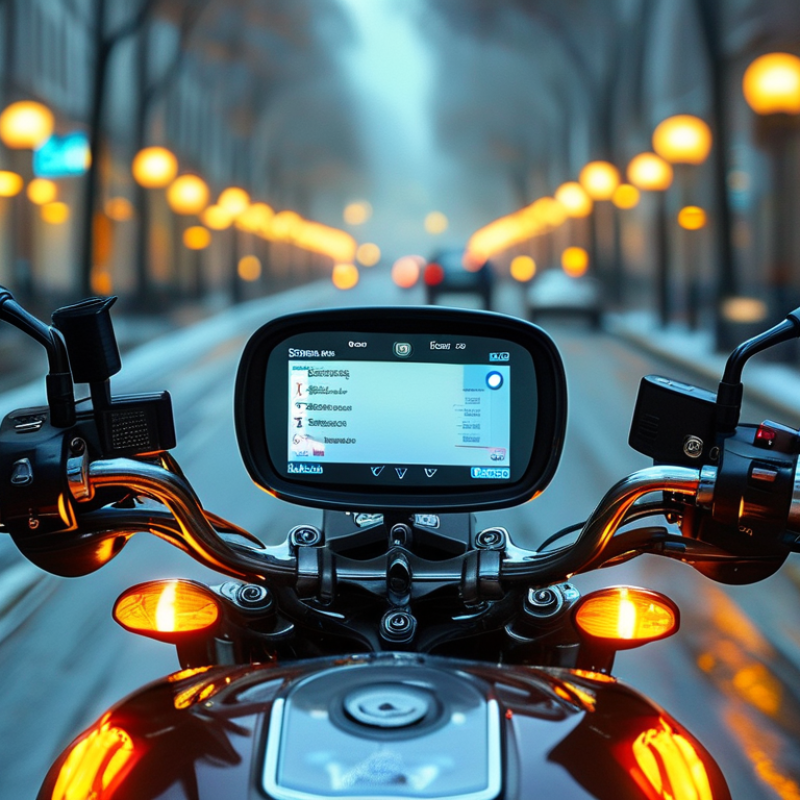
Motorcycle CarPlay screens are compact displays designed for handlebars or dashboards. They bring navigation, calls, music, and selected phone functions into the rider’s view. Unlike a phone mounted directly to the bike, the screen usually offers larger controls and better weather protection.
Most units connect to a compatible phone through wireless or wired communication. The phone supplies maps and media, while the screen displays simplified controls. A microphone supports voice commands and calls. Some systems connect with helmet audio through Bluetooth. Power normally comes from the motorcycle battery, so correct wiring and a suitable fuse matter. Keep eyes on the road.
Installation may require a secure bracket, waterproof connectors, and careful cable routing. A technician can reduce vibration and electrical mistakes. Weather resistance matters, especially during sudden rain. A bright, 5-to-7-inch display remains easier to read under direct sunlight. Before buying, check phone compatibility, map availability, language options, voltage requirements, and local mounting rules.
The experience is not always seamless. Wireless connections can drop, and gloves may make small touch targets difficult. Physical buttons often feel more dependable. On a cold morning, that difference becomes obvious. No screen replaces attention, good riding practice, or legal compliance. Do not handle the phone while moving. Think beyond the feature list.

Top Motorcycle CarPlay Screens for Global Buyers
What Are Motorcycle CarPlay Screens and How Do They Work?
Motorcycle CarPlay screens are handlebar-mounted displays that connect to a smartphone through wired or wireless Apple CarPlay or Android Auto. They mirror compatible navigation, music, calls, and messaging functions while the phone remains in the rider’s pocket. The most common screen sizes available for motorcycle use are approximately 5, 6.25, and 7 inches, balancing readability with limited handlebar space.
Which Motorcycle CarPlay Screen Types Suit Different Riders?
Riders need different motorcycle CarPlay screen types, not simply the largest display. Commuters often suit compact wireless screens with bright panels, glove-friendly controls, and quick phone pairing. A 5-inch unit can fit beside a mirror without blocking instruments. It works well for short urban trips, although small text becomes tiring in heavy rain. GSMA’s Mobile Economy 2024 report recorded about 4.6 billion mobile internet users worldwide in 2023. That figure supports the demand for connected riding, but connectivity does not replace careful screen placement.
Touring riders may prefer 6- to 7-inch screens with stronger speakers, larger route symbols, and stable mounting hardware for long highway use. Choose an IP-rated enclosure, anti-glare glass, and vibration-resistant brackets for long highway use. Off-road and adventure riders need sealed, shock-tolerant displays with physical controls. Touch-only operation is less practical with wet gloves.
It sounds convenient. It is not always convenient. The European Commission’s Road Safety Thematic Report on Distraction highlights the danger of visual and manual attention loss while riding. Therefore, a screen should show only essential navigation information and support voice control when legal and suitable.
Riders should also check their motorcycle’s voltage, handlebar space, phone compatibility, and local road rules before installation. Cheap mounts can loosen after repeated vibration, a problem many product pages ignore.
How to Compare Display, Connectivity, Audio, and Safety Features
Choosing a motorcycle CarPlay screen requires more than checking screen size. A 5–7-inch display should remain readable through glare, rain, and winter gloves. Look for strong brightness, physical controls, and an IP65 or higher water-resistance rating. Touch-only control sounds modern, but it can be awkward on rough roads. I have found that viewing angle matters more than advertised resolution.
Connectivity should support both wired and wireless smartphone mirroring, Bluetooth, and stable GPS pairing. GSMA Intelligence reported about 4.7 billion mobile internet users worldwide in 2024, so reliable phone integration is increasingly practical for global riders. However, weak wireless modules can create delays, dropped calls, or frozen maps. Test pairing before installation. Regional phone standards may also affect performance.
Audio deserves a careful comparison. A screen should offer clear volume control, microphone input, and compatibility with helmet speakers. Excessive volume can hide horns and emergency vehicles. The World Health Organization’s Global Status Report on Road Safety 2023 recorded approximately 1.19 million annual road deaths, with motorcyclists among the most vulnerable road users. NHTSA reported 3,208 U.S. traffic deaths involving distracted driving in 2022. Safety features therefore matter: automatic brightness, voice control, glove-friendly buttons, and a quick-access mute function are useful. Not every “smart” feature improves riding. Some still need real-world testing.
Top Motorcycle CarPlay Screens for Global Buyers? - How to Compare Display, Connectivity, Audio, and Safety Features
| Comparison Dimension | Essential Touring Setup | Balanced All-Round Setup | Advanced Touring Setup | What Global Buyers Should Verify |
|---|---|---|---|---|
| Recommended screen size | 4.3–5.0 inches | 5.0–6.5 inches | 6.5–7.0 inches | Choose a screen that remains readable without blocking the instrument cluster, controls, or road view. |
| Display resolution | 800 × 480 pixels or higher | 960 × 540 pixels or higher | 1280 × 720 pixels or higher | Higher resolution improves map detail, but brightness and viewing angle are equally important outdoors. |
| Daylight visibility | At least 700 nits; anti-glare surface recommended | 800–1,000 nits; anti-glare surface recommended | 1,000 nits or more; optical bonding preferred | Ask for measured brightness, not only marketing descriptions such as “sunlight readable.” |
| Touch operation | Resistive or capacitive touch; usable with light gloves | Capacitive touch; glove mode preferred | Capacitive multi-touch; glove mode and physical controls preferred | Test operation with motorcycle gloves and check whether touch sensitivity changes in rain. |
| Weather protection | IP65 minimum | IP67 preferred | IP67 or higher, with sealed connectors | IP ratings address dust and water ingress under defined test conditions; mounting and cable seals still matter. |
| Operating temperature | Approximately −10°C to 60°C | Approximately −20°C to 65°C | Approximately −20°C to 70°C | Compare the specified operating range with the climate where the motorcycle will be used and stored. |
| Apple CarPlay support | Wired or wireless, depending on configuration | Wireless preferred; wired fallback useful | Wireless and wired modes with automatic reconnection | Confirm compatibility with the phone’s operating-system version and whether wireless pairing is stable after ignition cycles. |
| Android Auto support | Wired or wireless, depending on configuration | Wireless preferred; wired fallback useful | Wireless and wired modes with automatic reconnection | Check regional phone compatibility, cable requirements, and whether setup requires a separate application. |
| Bluetooth connectivity | Hands-free calling and music streaming | Hands-free calling, music streaming, and intercom pairing | Multiple Bluetooth profiles with stable headset and phone switching | Confirm support for the required profiles, especially hands-free calling, media audio, and headset connection. |
| Wi-Fi and firmware updates | Wi-Fi may be unavailable; USB update possible | Wi-Fi or USB firmware update | Wi-Fi firmware update with clear version history | Verify update availability, update instructions, file formats, and whether updates can be performed without a subscription. |
| Navigation capability | Phone-based navigation through CarPlay or Android Auto | Phone-based navigation with route audio prompts | Phone-based navigation plus optional standalone GPS capability | Phone projection generally provides fresher map data; standalone navigation can be useful where mobile coverage is limited. |
| Audio output | Bluetooth headset output or basic built-in speaker | Bluetooth headset output and 3.5 mm or USB audio option | Bluetooth headset output, wired audio option, and higher-output speaker system | For safe riding, audio should remain clear without requiring excessive volume that can mask traffic sounds. |
| Microphone performance | Single microphone; wind protection recommended | Noise-reduction microphone with windscreen | Dual-microphone or advanced noise-reduction design | Look for practical call-quality tests at riding speed, not only indoor demonstrations. |
| Camera support | Usually not included | Optional front or rear camera input | Front/rear camera inputs with recording or split-screen support | Check camera resolution, frame rate, storage method, weather protection, and whether recording is legal locally. |
| Safety alerts | Basic navigation and call controls | On-screen turn prompts and optional tire-pressure information | Navigation prompts, tire-pressure monitoring, camera view, and emergency-contact integration | Safety functions should support attention management; they must not encourage frequent interaction while moving. |
| Tire-pressure monitoring | Not included or optional external sensors | Optional wireless sensors; pressure and temperature display | Wireless sensors with low-pressure and high-temperature warnings | Confirm sensor frequency, battery replacement method, pressure units, and compatibility with regional valve types. |
| Power input | 12 V motorcycle supply; approximately 5–10 W consumption | 12 V supply with fused harness; approximately 8–15 W consumption | 12 V supply with ignition sensing and fused harness; approximately 10–20 W consumption | Use a fused connection and confirm voltage range, standby current, connector type, and battery-drain protection. |
| Mounting flexibility | Handlebar clamp mount | Handlebar and mirror-stem mounting options | Adjustable vibration-resistant mount with multiple installation options | Check handlebar diameter range, clearance, vibration control, and whether the mount can be locked against theft. |
| Anti-theft practicality | Quick-release or removable design recommended | Removable screen and concealed wiring preferred | Lockable mount, removable display, and low-visibility wiring | No screen is fully theft-proof; removable components and secure parking remain important. |
| Language and measurement settings | Major languages; metric or imperial units | Multiple languages, speed units, and temperature units | Broad language coverage, regional time formats, and configurable units | Confirm the actual menu languages, map-language support, speed units, temperature units, and date format. |
| Best fit | Commuters seeking essential phone projection at a lower installation cost | Daily riders and touring users wanting a strong balance of visibility, connectivity, and audio | Long-distance riders needing larger visibility, broader accessories, and expanded safety integration | Prioritize the features that remain useful in real riding conditions rather than selecting by screen size alone. |
Note: Specifications are practical comparison ranges and verification guidelines rather than claims about any particular product. Actual performance depends on installation, phone model, accessories, weather, and local regulations.
What Compatibility Factors Matter for Motorcycles and Smartphones?
Top Motorcycle CarPlay Screens for Global Buyers?
Compatibility starts with the motorcycle, not the display. Check the vehicle’s 12-volt output, ignition behavior, and available mounting space. A screen that fits a touring bar may shake badly on a smaller motorcycle. Vibration also affects charging cables, touch accuracy, and camera connections. Field testing should include rain, gloves, sunlight, and cold starts. A specification sheet can still mislead.
Smartphone compatibility needs equal attention. Confirm the required operating systems, wireless projection standards, Bluetooth profiles, and Wi-Fi frequencies. GSMA’s State of Mobile Internet Connectivity 2023 reported 4.6 billion mobile internet users worldwide. That figure reflects enormous device diversity, not universal compatibility. Older phones may support Bluetooth calls but fail wireless projection. Some newer phones connect quickly, then disconnect when navigation and music run together. It happens.
Power delivery is another practical test. Measure the screen’s input range and the motorcycle’s charging stability under idle conditions. The Bluetooth SIG’s 2024 Market Update estimated 5.4 billion Bluetooth devices shipped in 2023. More devices do not guarantee smoother pairing. I would test the exact phone, helmet headset, and screen together before purchase. That step feels excessive, but it can reveal delayed controls, missing contact access, or unstable audio. Riders should also examine screen brightness, glove response, waterproofing claims, and software update support. These details matter more than a large display.
How Do Global Buyers Evaluate Installation, Certification, and Support?
Global buyers evaluate motorcycle CarPlay screens beyond brightness and price. Installation is the first practical test. A reliable unit should include clear wiring diagrams, labeled connectors, and mounting hardware for common handlebars. Waterproof plugs matter during sudden rain. I have found that a “universal” bracket is not always universal. Some bars need spacers, while others require extra clearance near the brake lever. Power connection deserves care. A qualified installer should check voltage stability, fuse protection, and cable routing before riding. Loose cables can distract the rider or interfere with steering. That detail is easy to miss.
Certification should be verified, not assumed from a sales page. Buyers should request applicable electrical, radio, and environmental test documents for their destination market. Document numbers, testing scope, and issuing laboratories should match the exact model. Certification marks alone may not explain regional requirements. Local rules can differ, and they can change. Support quality is equally measurable. Look for a searchable manual, firmware instructions, spare mounting parts, and a responsive technical contact. Ask how warranty claims work across borders. Shipping time, return responsibility, and language support can affect the real cost. A polished promise is not enough.
Tips: Photograph the original installation before removing anything. Test navigation, audio, touch response, and camera visibility in daylight. Then test them after rain exposure, if permitted. Keep serial numbers and invoices. Do not rush the first ride. My own evaluation would be more reliable with longer vibration testing; short demonstrations can hide faults. That weakness should be admitted.