


What Is the Best Vinyl Player Turntable in 2026?
Choosing the best Vinyl Player Turntable in 2026 is not simply a matter of picking the most expensive model. Your room, speakers, listening habits, and budget all shape the right choice. A compact automatic turntable may suit a small apartment, while a manual model can offer more control over playback. Neither is automatically better. It depends.
This guide compares the features that matter in everyday use: speed accuracy, cartridge quality, tonearm adjustment, built-in phono preamps, connectivity, and upgrade options. It also considers setup, because even a capable turntable can sound disappointing when placed on an unstable shelf or paired with unsuitable speakers. Small details count. A sturdy platter and a well-balanced tonearm may matter more than a flashy finish.
Product specifications are useful, but they do not tell the whole story. A published speed rating cannot guarantee how a turntable will perform in your room, and reviews may reflect different records, systems, and expectations. That uncertainty deserves attention. Rather than declaring one universal winner, this overview explains which designs suit different listeners and what compromises to check before buying. By the end, you should be better equipped to compare current options, understand the true cost of a complete setup, and choose a player that fits both your records and your routine.
What Defines the Best Vinyl Turntable in 2026?
The best turntable is not simply the one with the most features. It should hold a steady speed, track records reliably, and make setup manageable. Listen for stable pitch on sustained piano notes or vocals. Wavering can point to speed instability, though room noise and record condition also affect what you hear. Small details matter.
A well-matched tonearm and cartridge help the stylus follow the groove without excessive wear. Look for clear instructions on tracking force and anti-skate, plus adjustments you can make accurately. A built-in phono preamp can simplify connection to powered speakers. If your amplifier already has a phono input, that extra circuitry may not be useful. Check before buying.
Good isolation helps reduce vibration from footsteps, speakers, and a humming surface. Place the turntable on a firm, level support, then test it at a realistic listening volume. Quiet playback is a useful sign. Serviceability matters too: replaceable belts, standard cartridges, and accessible parts can extend a table’s useful life. Yet specifications cannot predict every room or record collection. Even a careful setup may need a second adjustment after listening. That is part of choosing well.

Key Features That Affect Turntable Performance
What Is the Best Vinyl Player Turntable in 2026?
Key Features That Affect Turntable Performance
A turntable’s sound depends on several parts working together, not one impressive specification. The drive system affects speed stability: a platter that rotates unevenly can make sustained piano notes waver. Direct-drive and belt-drive designs can both perform well when engineered and maintained properly. Check whether the speed remains consistent, and listen for audible rumble during quiet passages.
The tonearm and cartridge shape how accurately the stylus follows a record’s grooves. A properly adjustable tracking force helps reduce distortion and unnecessary wear. Anti-skate control matters, too, though it is often overlooked during setup. Small adjustments can change what you hear. A clean stylus, level platter, and sturdy surface are practical necessities, not glamorous extras.
Isolation and construction also affect performance. A lightweight table on a springy shelf may pick up footfalls; placing it on a firm, level surface can help. Built-in phono preamps offer convenience, while an external preamp allows more flexibility. Neither choice guarantees better sound. I would compare noise, speed stability, adjustment options, and cartridge compatibility before judging a model. Even then, room acoustics and record condition can complicate the verdict. There is no perfect checklist.
How Turntable Types and Components Compare
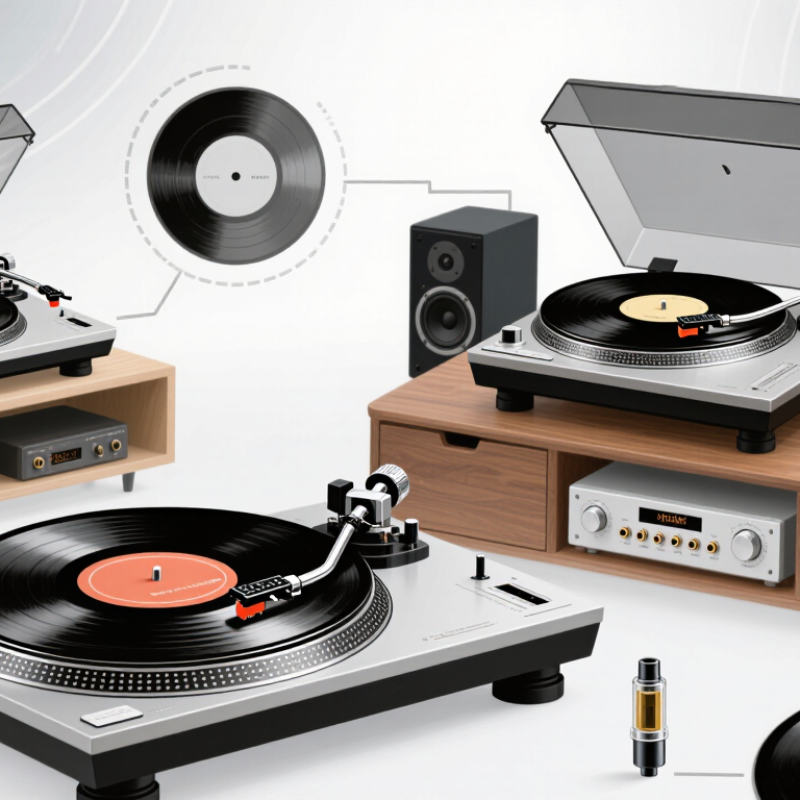
Choosing a turntable in 2026 starts with how much control you want. A belt-drive model isolates motor vibration with an elastic belt, making it a common choice for home listening. Direct-drive designs connect the motor more closely to the platter, offering quick start-up and steady speed. Neither type guarantees better sound; setup and build quality matter.
The parts shape the experience. A heavier platter can help maintain rotation, while a well-balanced tonearm tracks record grooves with less unwanted movement. The cartridge converts those tiny movements into an electrical signal. Replaceable cartridges allow upgrades, but compatibility can be confusing. A built-in phono preamp is convenient for connecting to powered speakers. An external preamp gives more flexibility, though it adds another box and cable.
Vinyl still has real demand. The Recording Industry Association of America reported that U.S. vinyl revenue reached $1.4 billion in 2023, up 10% from the previous year. That figure describes the market, not sound quality. Listen for speed stability, low motor noise, and clean tracking before choosing. Small details count. A slightly imperfect setup can make a good record sound thin, and correcting it may take patience.
| Type or component | How it works | Main strengths | Trade-offs | Best suited to |
|---|---|---|---|---|
| Belt-drive turntable | A motor turns the platter through an elastic belt. | The belt can help reduce motor vibration reaching the platter. Designs range from basic manual models to carefully engineered audiophile decks. | Belts can stretch or wear and may need replacement. Speed stability depends on the motor, belt, platter, and overall design. | Listeners prioritizing quiet playback, simple operation, and a wide choice of price levels. |
| Direct-drive turntable | The motor drives the platter directly, without a belt. | Typically offers quick start-up and strong torque. Many models provide electronic speed control; some include pitch adjustment. | Motor design and isolation matter: a poorly controlled motor can transmit vibration. Features and performance vary by model. | Frequent record changes, DJ use, or listeners who value rapid start-up and speed control. |
| Idler-wheel turntable | A rubber-edged wheel transfers rotation from the motor to the platter. | Can deliver strong torque and a robust mechanical feel. Well-maintained examples remain popular with some enthusiasts. | Many examples are older designs; wheel condition, servicing, and mechanical noise can be important considerations. | Collectors and enthusiasts interested in vintage equipment and willing to assess maintenance needs. |
| Drive type: what matters | Belt, direct, and idler describe how rotation reaches the platter—not a complete measure of sound quality. | Good speed accuracy, low noise, stable construction, and competent setup can be found across drive types. | A drive label alone cannot establish which turntable will sound best in a given system. | Comparing complete designs and specifications rather than choosing by drive type alone. |
| Cartridge | Converts stylus movement in the record groove into an electrical signal. Moving-magnet and moving-coil are common designs. | A replaceable cartridge lets owners tailor or upgrade playback. Moving-magnet models commonly use replaceable styli. | Compatibility depends on tonearm mass, cartridge compliance, mounting, and phono-stage input requirements. | Listeners who want a practical upgrade path and can match the cartridge to the tonearm and phono stage. |
| Stylus | The diamond tip tracks the groove and transfers its movement to the cartridge. | Tip shape and condition affect groove contact and tracking. Replacing a worn stylus helps protect records and maintain playback. | Styli wear with use; the appropriate replacement must match the cartridge. Correct alignment and tracking force are essential. | Every vinyl listener; routine inspection and correct setup are important for reliable playback. |
| Tonearm | Holds and guides the cartridge across the record while allowing it to track the groove. | Adjustments such as tracking force and anti-skate help achieve proper tracking. Some arms allow cartridge upgrades. | Setup can be sensitive, and not every tonearm suits every cartridge. Some entry-level arms offer limited adjustment. | Listeners seeking accurate tracking, adjustable setup, or future cartridge changes. |
| Platter and mat | The platter supports the record; a mat sits between the record and platter. | A stable platter helps maintain rotation. Mat materials and platter designs can influence record contact and handling. | Mass alone does not determine performance; speed control, bearing quality, and overall construction also matter. | Buyers comparing stability, bearing construction, and practical compatibility with their records. |
| Phono preamp | Applies the equalization and gain needed to bring a cartridge’s signal up to standard line level. | A built-in phono stage simplifies setup. An external phono stage provides another option for matching or upgrading a system. | A turntable without a phono stage needs a compatible external one or an amplifier with a phono input. | Choosing a setup that matches the available amplifier, powered speakers, and cartridge type. |
| Automatic operation | A mechanism starts playback and may lift the tonearm and stop the platter at the end of a record. | Reduces hands-on operation and can help prevent the stylus from continuing to run in the lead-out groove. | Mechanisms add moving parts and may limit adjustment or upgrade options on some models. | Convenience-focused listeners and people who prefer not to cue the tonearm manually. |
| Manual operation | The listener places and lifts the tonearm by hand; some models stop automatically, while others do not. | Often provides straightforward operation with fewer automatic mechanisms. | Requires attention when starting and finishing a record. | Listeners who prefer direct control and are comfortable cueing records themselves. |
| Practical buying decision | Compare the full turntable and system, including setup, connectivity, and intended use. | For many first-time buyers, a well-built, correctly adjustable model with a suitable cartridge and phono connection is a balanced choice. | There is no universally best turntable; budget, speakers, room, listening habits, and upgrade plans affect the right choice. | Choose the model whose performance, features, and setup requirements fit your listening system and priorities. |
| Comparison note: performance depends on the complete design and correct setup. Verify supported record speeds, cartridge compatibility, phono connectivity, and included accessories before buying. | ||||
Choosing a Turntable for Your Listening Setup
What Is the Best Vinyl Player Turntable in 2026?
Choosing a Turntable for Your Listening Setup
The best turntable is the one that fits your room, speakers, and listening habits. A compact setup may need a built-in phono preamp, which connects directly to powered speakers. With a separate amplifier, check whether it has a phono input before buying extra equipment. Small details matter. Leave enough space for the dust cover to open, and place the turntable on a stable, level surface. A wobbly shelf can make careful setup frustrating.
Think about how much adjustment you want to handle. A model with automatic operation can make casual listening simpler, while a manual design gives you more direct control. Check that replacement styluses are easy to find, and follow the maker’s guidance for tracking force and cartridge alignment. These details affect both sound and record wear. Keep the turntable away from speakers when possible; vibration can muddy playback, especially at higher volume.
Budget for the whole setup, not just the deck. A good cartridge, clean records, and suitable speakers can shape the result as much as the turntable itself. I would not chase specifications alone: a feature-rich model can still be awkward in a cramped room. That trade-off is easy to miss. Pick a setup you can place correctly, maintain comfortably, and enjoy without turning every listening session into a project.
Top Turntable Options by Budget and Use Case
For a tight budget, look for a turntable with a built-in phono preamp and a replaceable stylus. These features reduce extra costs and make setup easier. Check that the platter sits level and the tonearm tracks steadily; uneven playback can spoil quiet passages. Simple is fine.
In the mid-range, prioritize adjustable tracking force, anti-skate control, and a sturdy plinth. These details help the stylus follow grooves more consistently and can make future cartridge upgrades practical. If you share a room, choose a model with a dust cover and clear speed controls. Convenience matters. A manual model may offer better hands-on control, but it can feel fussy when you just want music.
For frequent listening or a dedicated stereo setup, consider a heavier, well-isolated turntable with precise speed adjustment. Place it on a firm shelf, away from speaker vibration, and keep records clean; setup affects sound as much as the price tag. For casual use, spending more may bring little benefit. I would not chase every specification, though. A feature list can look reassuring while hiding awkward controls or difficult setup. Check the return policy, and make sure replacement styli are easy to find.