


10 Best Water Irrigation Hoses for Global Buyers

Choosing the right Water Irrigation Hose is rarely a simple matter of price, length, or attractive packaging. Global buyers must examine water pressure, climate, fittings, storage conditions, and expected service life. A hose used across a dry Australian field faces different demands from one installed in a humid European greenhouse. Small details matter. Wall thickness matters. Kink resistance matters.

Dr. Michael D. Dukes, an irrigation specialist and professor at the University of Florida, has said, “Irrigation scheduling is the process of determining when and how much to irrigate.” His observation also applies to hose selection. A well-designed irrigation system cannot perform consistently when its hose restricts flow, leaks at the connector, or collapses under pressure. Practical testing should include bending the hose near the coupling, checking the inner diameter, and observing its behavior during continuous use. These simple checks reveal weaknesses that product photographs often hide.

This guide compares ten Water Irrigation Hose options for buyers across different markets. It considers material quality, pressure ratings, flexibility, UV resistance, connector compatibility, and maintenance needs. Some models appear excellent on paper but disappoint in muddy fields or intense sunlight. No hose is perfect. Even experienced buyers can overlook local water chemistry or seasonal temperature changes. That uncertainty deserves attention, not confident promises. The strongest choice is the hose that matches the application, installation method, and operator’s daily habits. A cheaper product may work well for light gardening, yet fail quickly in commercial irrigation. Careful comparison remains essential.
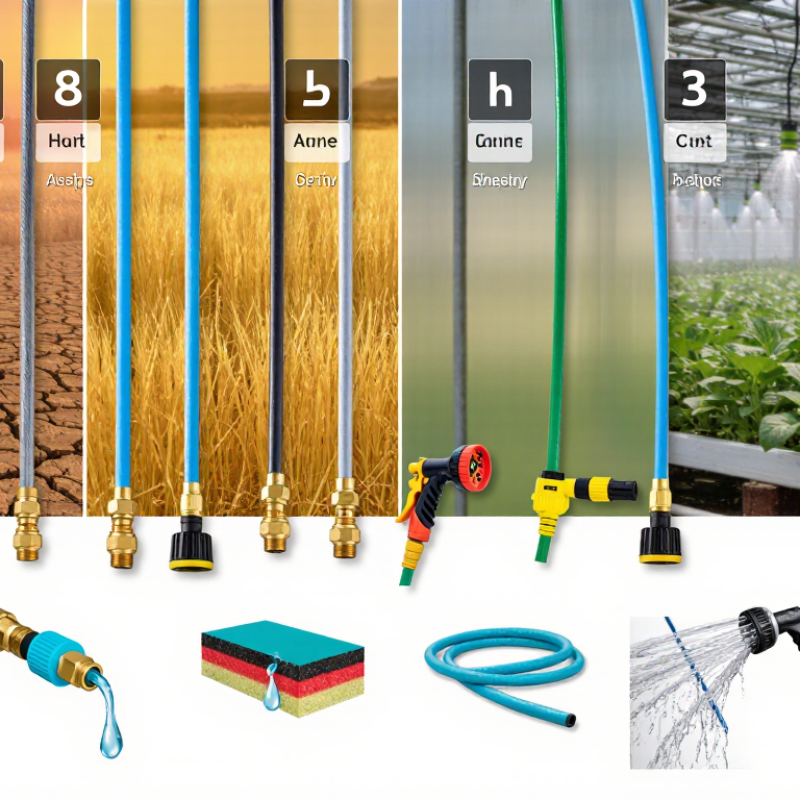
10 Best Water Irrigation Hoses for Global Buyers

Understanding Water Irrigation Hoses and Their Main Types

Water irrigation hoses move water from a source to crops, beds, orchards, or containers. Their design affects pressure, coverage, water loss, and maintenance. FAO AQUASTAT reports that agriculture uses about 70% of global freshwater withdrawals. This makes hose selection more important than it first appears. A cheap hose may leak, kink, or deliver uneven flow.

The main types serve different irrigation needs. Lay-flat hoses handle temporary field watering and store easily. Reinforced flexible hoses suit general transfer and moderate pressure. Soaker hoses release water through porous walls, supporting garden rows with gentle moisture. Dripline hoses deliver water near plant roots and usually reduce surface evaporation. Micro-spray hoses cover wider areas, but wind can distort their spray pattern. The U.S. Environmental Protection Agency notes that efficient irrigation improvements can reduce water use by 20% to 50%, depending on system conditions. Hose performance still depends on fittings, pressure, soil, and installation quality.

Tips: Measure the hose length before buying. Check its working pressure, inner diameter, and temperature rating. Flush new hoses before connecting emitters. Watch the first watering cycle closely. It may reveal uneven output. Do not assume a drip hose always saves water; excessive pressure, poor spacing, or sandy soil can waste it. This classification is useful, but not perfect. Mixed systems often perform better than one hose type alone. Record flow rates at the beginning and end of the line, then adjust the layout when results differ.


10 Best Water Irrigation Hoses for Global Buyers: Understanding Water Irrigation Hoses and Their Main Types

Representative water delivery capacity by common irrigation hose type

This chart compares representative water delivery values in liters per minute for widely used irrigation hose types. Drip products provide precise, low-volume watering for crops and planting beds, while lay-flat, polyethylene mainline, and reinforced PVC hoses are designed to move larger volumes of water. Actual performance depends on hose diameter, length, emitter spacing, water pressure, elevation, filtration, and installation conditions.

Key Factors Global Buyers Should Consider Before Purchasing

Choosing among the 10 best water irrigation hoses requires more than comparing prices.

The FAO AQUASTAT database reports that agriculture uses roughly 70% of global freshwater withdrawals. Small hose losses can therefore become significant on farms, nurseries, and large gardens.

Start with operating conditions.

Check the required pressure, water temperature, hose diameter, and daily exposure to sunlight. A 25-millimeter hose usually carries more water than a 19-millimeter hose, but it weighs more when filled. Confirm the working pressure, not only the burst pressure. That distinction matters. Select UV-resistant material for outdoor storage, especially in hot climates. Reinforced layers can reduce expansion, yet they may limit flexibility around sharp corners.

Water quality deserves attention.

Sediment can block narrow fittings, while mineral-rich water may harden internal surfaces over time. Use corrosion-resistant connectors and verify that seals remain compatible with the water temperature. The United Nations World Water Development Report 2024 highlights growing pressure on freshwater systems, making efficient delivery increasingly important. Look for hoses that support low-leak connections and controlled flow. A pressure regulator may improve performance.

Field experience suggests that length is often overestimated.

A longer hose can create pressure loss and unnecessary dragging. Measure the route first. I would also inspect the storage reel, because poor winding creates flat spots and hidden cracks. Product claims are not always complete. Request test standards, material details, warranty terms, and independent performance data before purchasing.

10 Best Water Irrigation Hoses for Different Farming Needs

Choosing the 10 best water irrigation hoses depends on crop type, soil, pressure, and farm scale. FAO AQUASTAT data indicate that agriculture accounts for about 70% of global freshwater withdrawals. That figure makes efficient delivery essential, not optional.

For row crops, lay-flat hoses suit long, temporary runs and tractor access. Dripline hoses work better for vegetables, orchards, and vineyards because they place water near the root zone. A porous soaker hose can support small beds, but clogged pores remain a common weakness. For greenhouse benches, choose narrow, flexible hoses with measured emitters. They reduce overspray around seedlings. For pasture or large fields, reinforced high-flow hoses handle longer distances, although they need stronger pumps and secure couplings. No hose is perfect.

Field checks should include pressure, flow rate, UV resistance, and connector size. A hose rated for 4 bar may perform poorly when filters, elevation, and bends reduce pressure. The Irrigation Association recommends designing systems around measured flow, rather than guessed pump capacity. That principle is easy to ignore. It costs water and time. FAO’s State of Food and Agriculture reports also link better irrigation management with improved water productivity, but local soil and climate can change results. Test one section first. Measure wetting depth after thirty minutes, inspect leaks, and avoid storing flexible hoses under direct sunlight.

How to Compare Hose Materials, Sizes, Pressure, and Durability

Choosing among the 10 best water irrigation hoses requires more than comparing prices. Material affects flexibility, weight, chemical resistance, and service life. PVC hoses are affordable and light, but they can stiffen in cold weather. Rubber handles heat and rough handling better, though it is heavier. Polyurethane offers low weight and strong abrasion resistance. Hybrid materials can balance flexibility and durability, but their quality varies between manufacturers.

Size directly affects water delivery. A 1/2-inch hose suits small beds and short runs. A 5/8-inch hose offers a practical balance for most gardens. A 3/4-inch hose carries more water across longer distances, but it needs stronger fittings. Always compare internal diameter, not only the outside measurement. A narrow hose may look convenient, yet it can reduce flow noticeably.

Pressure ratings deserve careful attention. Check the working pressure, not just the burst pressure. Leave a safety margin for pumps, valves, and pressure changes. Durability also depends on UV exposure, dragging, twisting, and storage. Look for reinforced layers, corrosion-resistant connectors, and flexible seals. In my experience, an expensive hose can still fail when left under summer sun. I once focused too heavily on pressure ratings and overlooked connector quality. That mistake was costly. Buyers should also check temperature limits, warranty terms, and available metric fittings for local compatibility.

10 Best Water Irrigation Hoses for Global Buyers - How to Compare Hose Materials, Sizes, Pressure, and Durability

Rank Hose Type Typical Material Construction Common Sizes Typical Working Pressure Typical Burst Pressure Temperature Range Durability Best Application Main Advantages Important Limitations
1 Reinforced PVC Layflat Hose Flexible PVC with polyester yarn reinforcement 25–150 mm (1–6 in) 4–10 bar
(58–145 psi)
12–30 bar
(174–435 psi)
−10 to 60°C
(14 to 140°F)
High Agricultural water transfer, pumps, and temporary irrigation lines Lightweight, compact when empty, high flow capacity, easy to deploy Can kink if poorly laid; prolonged sunlight may reduce service life without UV protection
2 Braided PVC Garden Hose Multi-layer PVC with textile braid reinforcement 12.5–25 mm (1/2–1 in) 6–12 bar
(87–174 psi)
18–36 bar
(261–522 psi)
−5 to 60°C
(23 to 140°F)
Medium–High Home gardens, nurseries, greenhouse cleaning, and general watering Good flexibility, economical, widely compatible with standard fittings May become stiff in cold weather; abrasion resistance depends on the outer layer
3 EPDM Rubber Water Hose EPDM rubber tube with synthetic textile reinforcement 12.5–50 mm (1/2–2 in) 7–15 bar
(102–218 psi)
21–45 bar
(305–653 psi)
−40 to 100°C
(−40 to 212°F)
Very High Professional landscaping, exposed outdoor service, and demanding irrigation work Excellent weathering, ozone, and temperature resistance; remains flexible over a wide range Heavier and generally more expensive than PVC; not suitable for every chemical
4 TPU Layflat Hose Thermoplastic polyurethane with high-tenacity fabric reinforcement 25–200 mm (1–8 in) 6–20 bar
(87–290 psi)
18–60 bar
(261–870 psi)
−40 to 80°C
(−40 to 176°F)
Very High High-pressure irrigation, long-distance water transfer, and rental equipment Excellent abrasion and tear resistance, low weight, strong pressure capability Higher purchase cost; fittings must be correctly selected and clamped
5 Polyethylene Drip Irrigation Tube UV-stabilized low-density or linear low-density polyethylene 12–32 mm (16–1 in) 1–4 bar
(15–58 psi)
3–12 bar
(44–174 psi)
0 to 50°C
(32 to 122°F)
High Row crops, orchards, vegetable beds, and water-saving irrigation systems Efficient water delivery, low operating pressure, easy installation and branching Emitters can clog; requires filtration and flushing, especially with untreated water
6 Soaker Hose Permeable recycled rubber or porous PVC 12.5–19 mm (1/2–3/4 in) 1–3 bar
(15–44 psi)
3–9 bar
(44–131 psi)
0 to 50°C
(32 to 122°F)
Medium Garden beds, hedges, borders, and low-pressure root-zone watering Reduces surface runoff and evaporation; simple to operate and install Uneven water distribution can occur; excessive pressure may damage the porous wall
7 Aluminum-Covered Fire-Resistant Hose Synthetic rubber tube with textile reinforcement and protective outer cover 25–75 mm (1–3 in) 8–16 bar
(116–232 psi)
24–48 bar
(348–696 psi)
−30 to 80°C
(−22 to 176°F)
Very High Irrigation near heat sources, emergency water transfer, and harsh industrial sites Improved resistance to radiant heat, abrasion, and outdoor exposure Heavier and less flexible; not a substitute for a certified fire-service assembly
8 Suction and Delivery Hose PVC or rubber tube with rigid spiral reinforcement 25–150 mm (1–6 in) 3–8 bar
(44–116 psi)
9–24 bar
(131–348 psi)
−20 to 60°C
(−4 to 140°F)
High Pumping from tanks, ponds, wells, and open water sources Resists collapse under suction; suitable for pump inlet and outlet service Less flexible than ordinary delivery hose; requires airtight connections
9 Flat Drinking-Water Hose Food-contact-grade PVC or TPU with textile reinforcement 19–50 mm (3/4–2 in) 4–10 bar
(58–145 psi)
12–30 bar
(174–435 psi)
0 to 60°C
(32 to 140°F)
High Greenhouses, mobile water tanks, livestock watering, and potable-water-compatible tasks Compact storage, low odor, and available with materials intended for potable water Only certified food-contact models should be used for drinking water; avoid stagnant storage
10 Nylon-Reinforced Polyurethane Hose Polyurethane inner tube with nylon braid or spiral reinforcement 6–25 mm (1/4–1 in) 8–20 bar
(116–290 psi)
24–60 bar
(348–870 psi)
−20 to 80°C
(−4 to 176°F)
Very High Precision irrigation, spray equipment, nurseries, and compact high-pressure systems Lightweight, highly abrasion-resistant, and capable of handling elevated pressure Smaller internal diameters restrict flow; fittings and pressure ratings must be matched carefully

Note: Pressure and temperature figures are typical industry ranges for correctly manufactured hose assemblies. Actual ratings vary by wall thickness, reinforcement, fittings, operating temperature, and applicable regional standards. Always verify the manufacturer’s technical data before purchase.

Installation, Maintenance, and International Buying Considerations

Selecting an irrigation hose requires more than comparing length and price.

Installation begins with accurate measurements and a clear water-flow plan. Measure twice. Choose the diameter according to pressure, distance, and emitter requirements. Use compatible connectors, clamps, and sealing washers to prevent slow leaks. A pressure regulator can protect the hose from sudden surges. Lay the hose on smooth ground, away from sharp stones and hot surfaces. Do not bury it before testing every joint. Leave a gentle loop near valves to reduce tension.

Maintenance depends on regular inspection, not emergency repairs.

Check for bulges, stiff sections, pinholes, and damaged fittings each month. Flush the hose after installing filters or fertilizer equipment. Drain standing water before freezing weather. Store dry hoses under shade, without tight bends or heavy objects on top. Replace cracked seals immediately. I have seen small leaks waste more water than expected. That lesson remains easy to overlook. Keep records.

International buyers should confirm hose length, internal diameter, working pressure, temperature range, and material data.

Metric and imperial fittings may look similar but often fail to seal. Ask for technical sheets, inspection records, and clear packaging dimensions. Confirm the shipping term, spare-part availability, and destination requirements before payment. Calculate freight by both weight and volume. Keep spare connectors and seals locally. A cheaper hose may become expensive after delays, returns, or unsuitable adapters. Buying samples first is slower, but it can expose weaknesses before a larger order.

REQUEST FOR PORPOSAL

Bring the essence of Current to your space! Whether you envision a cozy coffee kiosk, a stylish window café, a dynamic coffee bar, or a multi-station coffee drive-through, the possibilities are endless.  Please fill out the form below to submit your proposal request. Our team will review your information and get back to you shortly.