How to Choose the Best Agricultural Drones for Your Farm?
Agricultural Drones have transformed farming practices in recent years. According to a report by MarketsandMarkets, the agricultural drone market is projected to grow from $1.2 billion in 2020 to over $6 billion by 2026. This rapid expansion highlights their increasing significance in modern agriculture. Experts emphasize that the right technology can enhance efficiency and yield.
Dr. Emily Johnson, a renowned specialist in precision agriculture, states, "Selecting the right agricultural drones can redefine farm management and productivity." However, choosing the best drone is not straightforward. Factors like payload capacity, camera quality, and software compatibility must be considered. The variability in drone technologies makes this decision complex yet essential.
Moreover, many farmers face challenges in adopting these technologies. There can be a steep learning curve, and the initial investment might deter some. To navigate this evolving landscape, a careful evaluation of agricultural drones is crucial. Understanding both the advancements and limitations will lead to better decision-making for the future of farming.
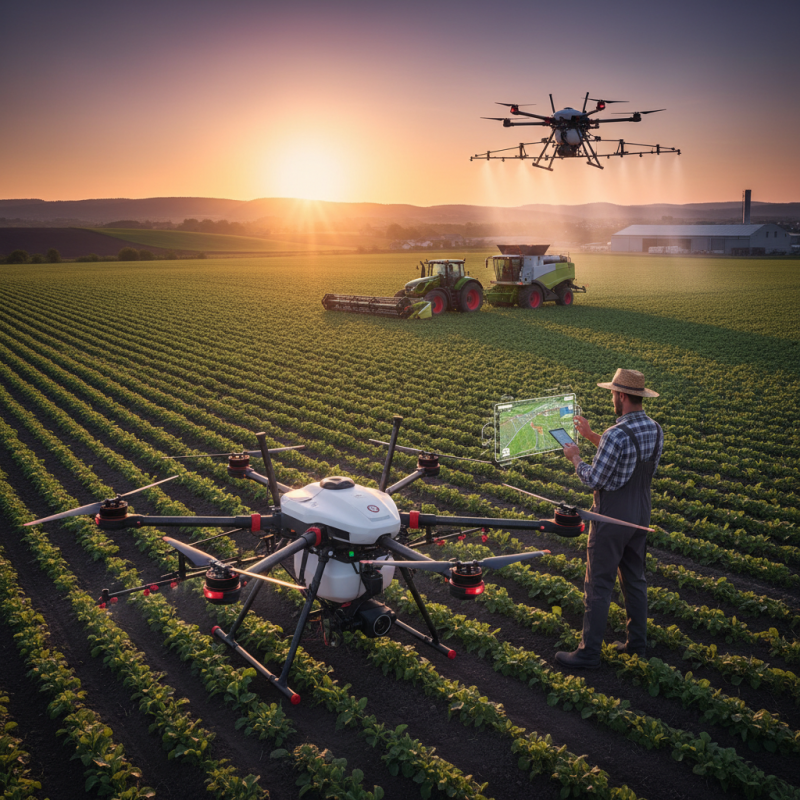
Understanding the Role of Drones in Modern Agriculture
Drones are transforming modern agriculture in unprecedented ways. They enable farmers to monitor crops, assess plant health, and manage resources efficiently. By using aerial imagery and data analytics, farmers make more informed decisions, enhancing productivity. Understanding how to effectively integrate these technologies is crucial for maximizing farm operations.
Consider these tips when choosing agricultural drones. Select models with high-resolution cameras. This allows for clear data collection, leading to better assessments. Ensure the drone has a reliable GPS system. Accurate positioning helps with mapping fields precisely. Evaluate the battery life and payload capacity. Longer flight times and heavier payloads increase efficiency.
While integrating drones, be mindful of potential challenges. Data interpretation requires skill. Training may be necessary to maximize the benefits of drone technology. Additionally, consider local regulations. Compliance with airspace restrictions is essential for safe operation. Reflect on these factors before making a final decision.
Key Features to Consider When Choosing Agricultural Drones
Choosing the right agricultural drone involves several key features that can significantly affect farm productivity. One essential aspect is the drone's payload capacity. According to recent industry statistics, drones with a higher payload can carry more sensors and equipment, allowing for comprehensive data collection. This can lead to better crop monitoring and yield predictions.
Another important factor is battery life. A drone with a longer battery can cover larger areas efficiently. Studies show that battery life directly impacts flight time and productivity. On average, drones with 30-40 minutes of flight time can survey up to 100 acres in a single trip. This efficiency can reduce operational costs.
Consideration of sensor types is crucial as well. Multi-spectral cameras are beneficial for assessing crop health. They can capture data that is invisible to the naked eye. Meanwhile, thermal sensors can help in irrigation management. The right combination of sensors can enhance data accuracy, but they often have varying costs and complexities that farmers need to evaluate.
Types of Agricultural Drones and Their Specific Applications
When considering agricultural drones, understanding their types is essential. Two primary categories are fixed-wing and multi-rotor drones. Fixed-wing drones excel in covering large areas quickly. They are suitable for mapping and surveying vast farmland. However, they may struggle in areas with obstacles like trees or buildings. Multi-rotor drones, on the other hand, are versatile. They can hover, making them ideal for precise tasks, such as crop inspection.
Each drone type has specific applications. For instance, some are equipped with cameras or sensors for crop health analysis. These drones can capture high-resolution images, helping farmers detect disease early. Other drones specialize in spraying pesticides or nutrients. They can apply these chemicals accurately. This reduces waste and minimizes environmental impact. However, operators must be cautious. Improper use can lead to overspray and harm beneficial insects.
Farmers should also consider flight time and payload capacity. A drone with a longer flight time increases efficiency. Yet, a larger payload may be necessary for specific tasks. Though many farmers find drones beneficial, they require training and practice. Navigating challenges like weather and regulations is crucial. Proper planning ensures the best outcome for your farm.
Evaluating Budget and Cost-Effectiveness of Drones for Farming
When selecting agricultural drones, budget is a crucial factor. Farmers must assess the initial investment and ongoing costs. It's essential to balance the features of the drone with your available funds. A high-end drone may offer advanced technology but can strain your budget. Consider whether the additional features justify the price. Sometimes, a mid-range model might provide sufficient capabilities for your needs at a lower cost.
Cost-effectiveness is another important aspect. Analyze how a drone could enhance your farming efficiency. Drones can help with crop monitoring and pest control. They reduce labor costs in the long run. However, it’s vital to evaluate the return on investment carefully. You should also account for potential maintenance and repair costs. Are you prepared for unexpected expenses?
Additionally, consider learning curves in drone technology. Some might find operating a drone challenging at first. This can lead to initial inefficiencies. Training requires time and additional costs. Ask yourself if you are ready to invest in that process. Reflect on these factors to ensure that your choice aligns with both your goals and your budget.
Evaluation of Agricultural Drones by Cost-Effectiveness
This bar chart illustrates the cost-effectiveness scores of various agricultural drones based on evaluation criteria. Higher scores indicate better cost-effectiveness, helping farmers make informed decisions about drone purchases for their operations.
Regulations and Compliance for Using Drones in Agriculture
When integrating drones into agriculture, understanding the relevant regulations is vital. Farmers must familiarize themselves with local laws concerning drone usage. These regulations often cover flight altitude, no-fly zones, and the required licenses for operation. Each region has its own set of rules, so thorough research is essential. Compliance with these regulations not only ensures safety but also protects the investment in drone technology.
Tip: Always check for updates on drone regulations. They can change frequently. Stay informed through official government websites or agricultural organizations.
Moreover, drone operation must consider privacy issues. Farmers should be aware of the potential for unintentional data collection. Neighboring properties or public spaces can fall under scrutiny if drones capture images. As a result, understanding liability and privacy laws is crucial.
Tip: Communicate with neighbors about drone usage to avoid misunderstandings. Open discussions can build trust and clarify intentions.
By focusing on regulations and compliance, farmers can effectively utilize drones. However, overlooking these aspects can lead to legal challenges. Balancing innovative practices with respect for the law is key to success in modern agriculture.
How to Choose the Best Agricultural Drones for Your Farm? - Regulations and Compliance for Using Drones in Agriculture
| Drones Type | Max Flight Time (min) | Payload Capacity (kg) | Camera Resolution (MP) | Range (km) | Applicable Regulations |
| Multirotor Drones | 25 | 2 | 20 | 5 | FAA Part 107 |
| Fixed-Wing Drones | 120 | 10 | 36 | 15 | FAA Part 107 |
| Hybrid Drones | 80 | 5 | 25 | 10 | FAA Part 107 |
| Agricultural Drones with Spraying Capability | 30 | 3 | 12 | 5 | FAA Part 107, EPA Regulations |