


How to Choose the Best Sink Toys for Your Store?
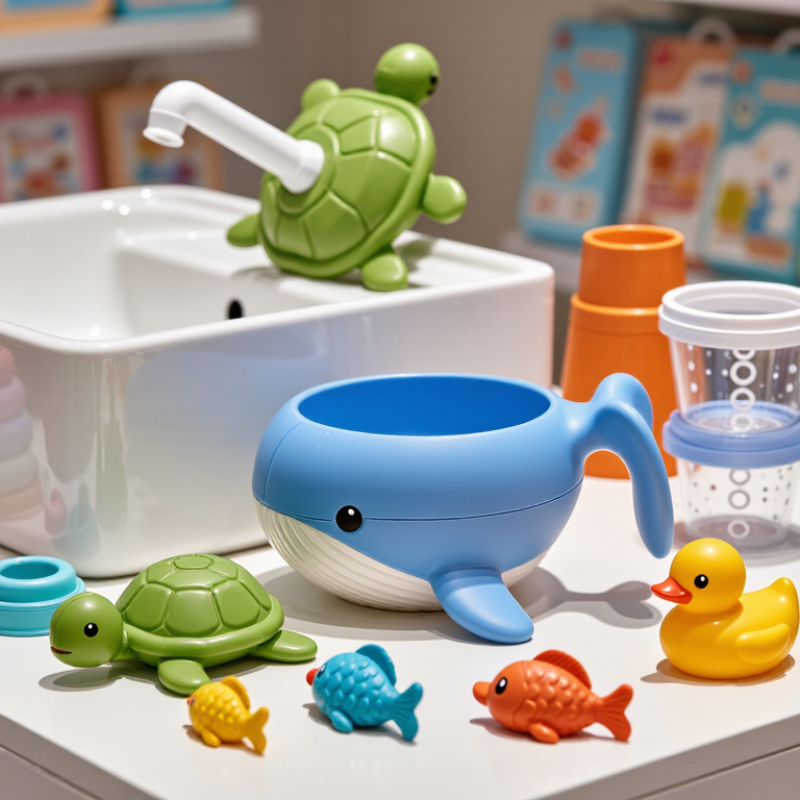
Choosing the right SINK TOY for your store means looking beyond bright colors and cheerful packaging. Parents want toys that make bath time or sink-side play engaging, while retailers need products that hold up to repeated handling. A whale-shaped cup may catch a child’s eye, but its edges, grip, and ease of cleaning matter too. Small details matter.
This guide explores practical ways to assess materials, age guidance, design, durability, and supplier information before placing an order. Check whether pieces feel sturdy, fit comfortably in small hands, and dry without trapping water in hard-to-reach spaces. If a toy uses suction cups, test them on a clean, smooth surface; performance can vary on textured sinks. A display sample can reveal issues that product photos miss.
There is no single best choice for every shop. A family-focused boutique may favor simple, compact sets, while a larger retailer may need several price points and designs. Compare packaging clarity, replacement availability, and customer feedback alongside cost. Ask suppliers for relevant product details, and avoid relying on vague claims. A checklist helps, but it cannot replace hands-on inspection. Some details may still surprise you. The aim is a thoughtful selection that feels useful to caregivers, enjoyable for children, and dependable on your shelves.
Define Sink-Toy Categories by Age, Play Function, and Retail Audience
How to Choose the Best Sink Toys for Your Store?
Define Sink-Toy Categories by Age, Play Function, and Retail Audience
Organize sink toys by age range, but use the maker’s guidance rather than guessing from appearance. Check for small components, detachable pieces, and cleaning instructions before assigning shelf space. Younger children may enjoy large cups and easy-grip floating toys. Older children may prefer pouring challenges, water wheels, or simple sorting games. Keep it simple.
Then group products by play function. Pouring toys support hand control and cause-and-effect learning. Floating figures invite pretend play, while suction toys can stick to smooth surfaces near the sink. Clear category labels help shoppers compare options quickly. A parent looking for a travel-friendly toy has different needs from a gift buyer choosing a colorful set. Small details matter.
Tips: Show one toy in use, such as a cup pouring water into a small wheel. Keep age guidance visible, and avoid promising that a toy suits every child. No category system is perfect; shoppers may browse by color before function, so leave room for flexible displays.

Verify Compliance: CPSIA Limits Lead to 100 ppm and Phthalates to 0.1%
For sink toys, compliance starts with the parts a child can touch or mouth: soft spouts, suction cups, painted details, and flexible plastic. CPSC rules set a 100 ppm total-lead limit for accessible component parts in children’s products; surface coatings have a separate 90 ppm limit. Under CPSIA Section 108, each of eight specified phthalates must stay at or below 0.1% (1,000 ppm) in applicable children’s toys and child-care articles. These figures come from CPSC requirements, not a general “safe materials” claim. Check which components and chemicals each test report actually covers.
Ask suppliers for current, product-specific results from a CPSC-accepted third-party laboratory. Match the report to the exact model, material, and production batch; a test for one color may not represent another. A useful report identifies the tested parts, methods, dates, and measured concentrations—not just “passed.” Keep the paperwork with purchase records, and review it when materials or factories change. Small details matter. A clear silicone suction cup may use a different formulation from the toy’s rigid body. Even careful checks have limits: documents can be incomplete, and a tidy certificate cannot prove every later batch is identical. Review the evidence, then verify again.
Assess Water-Safe Materials, Drainage, and Drying for Mold Prevention
Sink toys spend long periods wet, so material choice matters as much as color or shape. Look for clearly identified, water-safe materials with smooth surfaces and no loose parts. Check seams, joints, and painted areas for gaps or peeling. These small defects can collect residue or become harder to clean over time. Small details matter.
Drainage deserves a close look. A toy may appear open yet still trap water behind a plug, narrow neck, or sealed compartment. Choose designs that drain freely when tilted, and inspect sample pieces after rinsing. A few drops left inside are easy to overlook. Then check again.
Drying helps reduce conditions that encourage mold, but no design replaces regular cleaning and inspection. Favor toys that separate into simple parts or open wide enough to reach with a cloth. Ask suppliers for material and care information, and confirm that instructions are clear for caregivers. In a store, check whether packaging allows buyers to see drainage openings. One imperfect point: drying time varies with room airflow, so a quick shelf test may not reflect use in a steamy bathroom.
| Toy Construction | Material and Water-Safety Checks | Drainage Design | Drying Potential | Mold-Prevention Assessment | Store-Buyer Checklist |
|---|---|---|---|---|---|
| One-piece, open-form toy | Check the declared material, age grading, and applicable toy-safety documentation. A material description alone does not establish compliance. | Open edges and unobstructed openings let water escape without a sealed cavity. | Usually easier to air-dry because water-trapping spaces are limited. | Lower concern when the whole toy can be rinsed and dried. | Inspect seams, openings, and surfaces for places where water or residue could collect. |
| Hollow toy with a wide opening | Verify the product is intended for water play and that the material and colorants meet relevant requirements in the sales market. | A broad opening can allow water to be poured out and the interior to be reached for cleaning. | Can dry well when stored with the opening facing down or positioned for airflow. | Lower to moderate concern; depends on whether the inside is accessible and fully drainable. | Check that the opening is not blocked by a plug, narrow neck, or internal component. |
| Hollow toy with a small hole or plug | Request safety and care instructions; assess the complete assembled toy, not just the stated base material. | Small holes may release some water but can leave liquid inside; removable plugs add a part that needs inspection. | Limited access can make interior drying difficult, even if the outside feels dry. | Higher concern if water can enter but cannot be fully emptied and dried. | Ask for cleaning guidance and inspect whether the cavity can be opened, cleaned, and dried reliably. |
| Multi-piece toy with joints or tight seams | Check that components are securely assembled and that the product has appropriate age grading and required market documentation. | Joints and overlapping parts can create narrow gaps that hold water. | Drying may be slower around seams and moving parts; disassembly should only be expected if the instructions permit it. | Moderate to higher concern where crevices are hard to inspect or clean. | Look for accessible seams, clear care instructions, and no inaccessible water-trapping spaces. |
| Porous or absorbent components | Confirm the intended use and care guidance. Porous materials can retain water and residue more readily than smooth, non-porous surfaces. | Drain holes may not remove moisture absorbed into the material. | Drying depends on airflow, thickness, and the product’s care instructions. | Higher concern for products that remain damp or cannot be cleaned thoroughly. | Review cleaning and replacement guidance; avoid assuming that a surface rinse dries the interior. |
| Any toy with care or cleaning claims | Treat claims such as “dishwasher-safe” as product-specific; verify them in the manufacturer’s instructions rather than inferring from the material. | Check whether the design drains after cleaning and does not retain rinse water. | Follow the stated drying method; allow all surfaces and cavities to dry before storage. | Depends on design and care; no material or claim guarantees mold prevention. | Keep care instructions available to staff and customers; do not recommend heat or chemical cleaning unless specified. |
| Buying note: Prefer designs that are easy to empty, clean, inspect, and dry completely. Review applicable toy-safety requirements for each sales market—for example, ASTM F963 and relevant U.S. requirements or EN 71 requirements in the EU—and request current documentation from the supplier. These standards address product safety; they do not by themselves guarantee that a toy will remain mold-free. | |||||
Compare Suppliers by MOQ, Unit Cost, Quality Controls, and Lead Time
Choosing sink toys for a store means comparing the full order, not just the unit price. Ask each supplier for its minimum order quantity (MOQ), price breaks, and sample cost. A low MOQ can reduce the risk of slow-moving stock, while a lower unit cost may require a larger commitment. Circana reported that U.S. toy sales grew 6% in 2024, reaching $30.3 billion. That market-wide growth does not guarantee demand for any one product, so test a small order before expanding.
Quality controls deserve equal weight. Request written inspection criteria, batch records, and checks for leaks, loose parts, and finish defects. The U.S. Consumer Product Safety Commission estimated 231,700 toy-related emergency-department injuries among children under 15 in 2023. That figure covers toys broadly, but it underlines why documented checks matter. Ask who performs inspections and whether you can review recent records. A polished sample is not proof of consistent production.
Then compare lead times from order confirmation to shipment, and ask what happens if parts arrive late. Build a buffer for inspection and freight; a quoted factory schedule rarely captures every delay. I have learned that the cheapest quote can become the costliest order when rework or missed season dates follow. Small details matter. Put MOQ, final pricing, inspection steps, and delivery dates in writing before paying a deposit.
How to Choose the Best Sink Toys for Your Store?
Compare MOQ and unit cost first; bubble size indicates lead time, while color and legend show the quality-control score. These are illustrative planning estimates—not supplier quotes. Actual terms vary with toy design, materials, testing requirements, and order volume.
Plan Assortments Using Sell-Through, Gross Margin, and Shelf-Space Data
How to Choose the Best Sink Toys for Your Store?
Plan Assortments Using Sell-Through, Gross Margin, and Shelf-Space Data
Start with sales records, not guesses. Track each sink toy’s units sold and available stock by week. A high sell-through rate can signal strong demand, but check whether a promotion or holiday caused the jump. One busy week is not a pattern. Compare similar periods and note when shelves were empty, since missed sales can make a popular item look slow. Keep the notes simple enough for staff to update.
Then compare gross margin alongside sell-through. A toy that sells quickly may still contribute little if its unit cost is high. Review selling price minus product cost, and keep freight or discount effects visible in your broader profit review. Shelf space matters, too. Estimate margin dollars per shelf inch over a set period, then compare items with similar display conditions. Small packages may fit more units, but crowded shelves can hide them. That happens. Use the data to test a tighter assortment, then check results after a few weeks. The first layout may not be the best; record what changed before drawing conclusions.