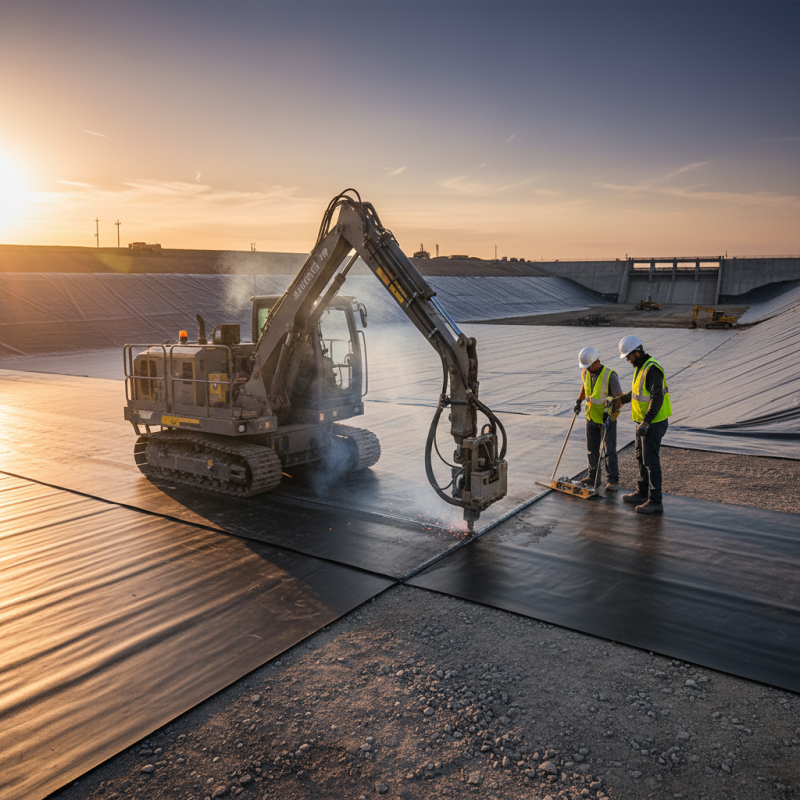
What is a geomembrane welding machine and how does it work?
geomembrane welding machines play a crucial role in various industries. They are used for lining ponds, landfills, and reservoirs. These machines ensure that seams are strong and waterproof. The process involves heating the edges of geomembranes and fusing them together.
These machines come in different types to suit specific applications. Some use hot air, while others employ electric or extrusion welding. Each method has its strengths and weaknesses. Operating geomembrane welding machines requires skill and precision. Mistakes can lead to failures in waterproofing, which is costly.
Understanding how a geomembrane welding machine functions is essential for achieving quality results. This technology relies on consistent performance and reliable equipment. Yet, some users may overlook the training necessary for proper operation. A lack of attention to detail can create serious issues down the line.
What is a Geomembrane Welding Machine?
A geomembrane welding machine is a specialized tool designed for joining geomembrane materials. These materials are often used in construction projects, such as landfills and containment ponds. The welding machine creates strong seams between geomembrane sheets, ensuring durability and leak resistance.
The process typically involves heating the edges of the geomembrane sheets. This can be done through hot wedge or hot air welding methods. The machine applies pressure, melting the material together. It’s impressive how such machines can handle various thicknesses of geomembrane, yet precision is vital. A single mistake can lead to weak points in the seam, causing future issues. The operator's skill matters greatly; improper technique can produce unsatisfactory results.
While these machines are effective, they require regular maintenance and calibration. Operators often overlook this crucial aspect. Regular checks can prevent significant problems down the line. Additionally, specific environmental conditions can impact the welding process. It’s essential to adapt techniques based on temperature or humidity. Many users admit that they learn best through trial and error. Finding the right balance between speed and quality is often a learning curve.
Geomembrane Welding Machine Usage Metrics
The Importance of Geomembrane in Construction and Environmental Projects
Geomembranes play a critical role in construction and environmental projects. Used as liners, they help manage fluids and waste. These synthetic membranes are vital in landfills, mining, and water containment systems. In fact, the global geomembrane market is expected to grow significantly, reaching approximately $3.4 billion by 2026, according to industry reports.
The effectiveness of geomembranes relies on proper installation. A geomembrane welding machine is essential in this process. It ensures strong seams that prevent leaks. High-quality welds can improve the lifespan of the liner and reduce maintenance costs. However, improper welding techniques can lead to failures. In some cases, the quality of seams is overlooked in favor of speed.
Environmental projects often face challenges, such as soil erosion and water contamination. Geomembranes provide a barrier against pollutants. According to studies, these products reduce leachate generation by over 90% in landfill applications. Despite these benefits, the environmental impact of manufacturing geomembranes is a concern. The industry must consider sustainability while meeting growing demand.
What is a geomembrane welding machine and how does it work? - The Importance of Geomembrane in Construction and Environmental Projects
| Dimension | Description | Importance | Applications |
| Welding Method | Heat fusion, extrusion welding, and solvent welding are common methods. | Ensures waterproof seals and structural integrity. | Landfills, ponds, and synthetic liners. |
| Material Types | Polyethylene (HDPE, LLDPE), PVC, and EPDM. | Different materials offer varying chemical resistance and durability. | Water containment, agricultural applications, and mining. |
| Welding Equipment | Includes handheld welding tools and automatic welding machines. | Enables efficient and effective joining of geomembranes. | Construction sites and environmental restoration projects. |
| Testing Methods | Non-destructive testing and peel testing for quality assurance. | Verifies the strength and durability of the welded seams. | Quality assurance processes in manufacturing and installation. |
How Does a Geomembrane Welding Machine Operate?
A geomembrane welding machine is essential for joining geomembranes used in various applications like landfill liners and water reservoirs. It operates using heated air or friction methods to bond sheets together. The device melts the edges of the materials, creating a strong, impermeable seal.
Understanding how this machine operates is crucial. It involves several key steps. First, the operator positions the geomembrane sheets accurately. Then, the welding machine heats the material edges to the desired temperature. Once melted, the operator presses the sheets together to form a bond. Attention to detail is vital here. Any misalignment can result in weak seams.
Additionally, operators must monitor the temperature and speed closely. If the heat level is too low, seals may not form correctly. Too high, and the material could burn. Testing different settings may be necessary for optimal results. Proper training is essential to avoid costly mistakes. Each project presents unique challenges that require careful consideration and adjustment.
Types of Geomembrane Welding Techniques
Geomembrane welding techniques are essential for constructing durable containment systems. The two primary methods are hot wedge welding and extrusion welding. Hot wedge welding involves a heated wedge that fuses two geomembrane sheets together. It’s often used in landfills and water reservoirs. A study by Geosynthetics Magazine states that hot wedge welding provides strong seams, achieving 90% or more peel strength.
Extrusion welding utilizes molten plastic to create a bond. This technique is versatile, suitable for varying thicknesses. It is particularly effective for repairs and creates a robust seal. Reports indicate that extrusion welds can withstand harsh conditions, making them valuable in environmental projects. Many contractors prefer this method due to its reliability and adaptability.
Proper training is vital for achieving optimal results. A misaligned seam can weaken the entire structure, leading to potential failure. Equipment calibration is equally essential. Uncalibrated machines may produce inconsistent welds, which could compromise integrity. According to industry data, insufficient training can lead to a 25% increase in project costs due to rework. Thus, attention to detail in geomembrane welding techniques is paramount.
Applications and Benefits of Using Geomembrane Welding Machines
Geomembrane welding machines are critical in various industries like construction, mining, and environmental protection. They are used to join geomembrane materials, which serve as barriers against liquids and gases. The machines utilize hot wedge or extrusion welding techniques. These processes generate heat, allowing seamless bonding of geomembranes. The result is a durable, waterproof seal essential for containment systems.
The applications of geomembrane welding machines are extensive. In landfill construction, they prevent leachate migration. A study by the Geosynthetic Research Institute shows that about 90% of modern landfills use geomembranes. Similarly, they are vital in irrigation and water management systems. By creating impermeable barriers, the machines help control water loss. However, operators must ensure proper temperature settings. Overheating can weaken the bonds, leading to potential failures.
Using these machines also has benefits beyond efficiency. They improve project timelines, as welding is faster than conventional lining methods. This efficiency can reduce labor costs by up to 30%. Yet, attention to detail is crucial. Imperfect seals can result in leaks, defeating the purpose of the geomembrane. Proper training and maintenance are vital for optimal performance. Balancing speed and quality is a challenge that operators must address.