


How to Source Acrylic Press On Nails Wholesale?
Sourcing Acrylic Press On Nails wholesale requires more than comparing prices on a supplier list. Buyers must examine product quality, production consistency, packaging, and communication before placing a large order. A polished photo can hide uneven edges, weak adhesive tabs, or inaccurate nail sizes. Small details matter.
A reliable sourcing process begins with verified manufacturers, detailed product specifications, and physical samples. Request samples in several shapes, lengths, finishes, and sizes. Check the nail thickness, flexibility, surface smoothness, and application comfort. Ask about materials, customization options, minimum order quantities, lead times, and quality-control procedures. Clear records make supplier comparisons easier and reduce costly misunderstandings.
Experience also shows that the cheapest quotation is rarely the complete cost. Freight, replacement rates, packaging changes, and delayed delivery can affect profitability. One supplier may offer attractive prices but provide inconsistent color matching between batches. That risk deserves attention. However, even a careful process is not perfect. Sample performance may differ during mass production, and communication can fail across time zones. Confirm important details in writing, inspect pre-shipment goods when possible, and choose suppliers with transparent business information. This guide explains practical steps for evaluating wholesale partners and building a more dependable sourcing plan for Acrylic Press On Nails.
Define Acrylic Press-On Nails and Wholesale Requirements
How to Source Acrylic Press-On Nails Wholesale?
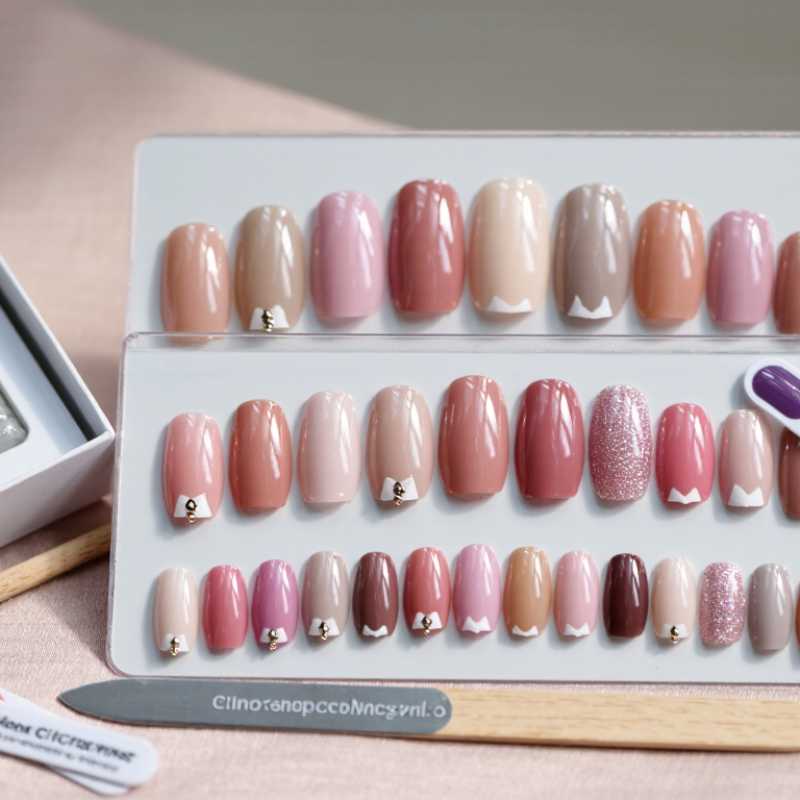
Acrylic press-on nails are pre-shaped artificial nails made from durable acrylic-based plastic. They attach over natural nails with adhesive tabs or nail glue. Unlike salon acrylic extensions, they require no liquid monomer application during use. This difference matters when comparing suppliers and product claims.
Wholesale requirements should begin with consistent sizing, thickness, curvature, and finish. Ask for complete sample sets before placing a large order. Check whether the nails fit narrow, medium, and wide nail beds. Inspect the edges under bright light. They should feel smooth, not sharp. Request details about material composition, production capacity, minimum order quantity, packaging, and replacement policies. Reliable suppliers should provide clear measurements and quality-control records. A lower unit price may still become expensive if many pieces arrive warped or poorly polished. I have learned that photos rarely reveal sizing problems.
Test samples for seven days. Record lifting, cracking, color changes, and comfort. Compare the adhesive separately. Ask for batch consistency. Keep one unopened sample for later inspection. Small mistakes happen, even with careful sourcing. Build a written checklist before negotiating prices. It prevents attractive packaging from hiding weak quality. Suppliers should also explain customization limits, print accuracy, production times, and shipping protection. Choose practical evidence over confident promises.

Set Product Specifications, Design Criteria, and Order Quantities
How to Source Acrylic Press On Nails Wholesale?
Set product specifications before discussing price. Define nail length, shape, thickness, curvature, surface finish, and adhesive method. A clear specification sheet should include ten or more size options, because poor sizing creates returns. State acceptable color variation, print alignment, edge smoothness, and packaging dimensions. For a wearable set, request samples from several production batches. Check flexibility, adhesion after washing, and removal without excessive nail damage. Details matter.
Design criteria should match the intended customer and sales channel. Soft neutrals may suit everyday retail, while chrome finishes and sculpted shapes can support seasonal collections. Still, trend decisions should not replace wearability. McKinsey’s Beauty market analysis projects the global beauty industry could approach 580 billion dollars by 2027, with roughly 6% annual growth. Grand View Research also reports steady growth in the artificial nails market through 2030. These figures support demand, but they do not guarantee every design will sell. I would test three to five designs before expanding the range.
Order quantities need disciplined testing. Ask suppliers for sample pricing, minimum order quantities, carton counts, lead times, and replacement policies. A first order of 300 to 500 sets per design can limit exposure when demand is uncertain. Smaller quantities may cost more per set. That trade-off is often worthwhile. Set a defect allowance in writing, such as a maximum percentage for damaged or mismatched pieces. Review the first shipment against the approved sample, not memory. That step is easy to skip. It should not be.
Identify and Compare Reliable Wholesale Nail Suppliers
Sourcing acrylic press-on nails wholesale starts with comparing suppliers, not chasing the lowest price. Reliable suppliers provide clear material details, size options, finish samples, and production timelines. Request physical samples before placing a large order. Check the nail thickness, adhesive quality, surface shine, and fit across different nail sizes. A professional supplier should also explain minimum order quantities, packaging choices, defect handling, and replacement terms. Vague answers are warning signs.
Tips: Build a simple comparison sheet. Record unit price, sample quality, response time, lead time, and shipping terms. Ask the same questions to every supplier. This makes differences easier to verify. Also request recent product photos or short factory videos. Images can be edited, so treat them as supporting evidence only.
In my sourcing experience, communication often predicts future reliability. A supplier that confirms specifications carefully may handle production changes better. Check whether their compliance documents match the actual product and export destination. Review customer feedback from several sources, not one testimonial. A cheap quote may hide weak packaging or inconsistent sizing. That mistake is expensive. I once underestimated carton protection, and several sample boxes arrived with bent corners. The nails remained usable, but the presentation was poor. It changed my checklist. Compare suppliers on total value, consistency, and accountability. Do not trust polished promises alone. Small test orders reveal more than long sales conversations.
How to Source Acrylic Press On Nails Wholesale? - Identify and Compare Reliable Wholesale Nail Suppliers
| Supplier Type | Typical MOQ | Sample Availability | Typical Production Lead Time | Customization Capability | Quality-Control Points | Best Use Case | Reliability Indicators |
|---|---|---|---|---|---|---|---|
| Specialized Nail Manufacturer | Approximately 500–2,000 sets per design or color | Usually available; sample fees may be charged and are sometimes credited against a bulk order | Approximately 15–30 working days after artwork and specifications are approved | High: nail shape, size mix, color, finish, artwork, packaging, and private-label inserts | Check nail thickness, size consistency, adhesion surface, finish uniformity, packaging accuracy, and batch samples | Established retailers and private-label collections requiring repeat production | High when documentation and batch controls are consistent |
| General Beauty-Product Wholesaler | Approximately 50–500 sets per style | Often available from existing stock | Approximately 3–10 working days for stocked items; longer for special orders | Low to medium: limited changes to existing styles and packaging | Verify current inventory, product photos, size assortment, packaging condition, and return terms | Small retailers testing demand across several ready-made designs | Medium; depends on inventory accuracy and fulfillment history |
| Custom Packaging and Private-Label Partner | Approximately 1,000–5,000 sets, depending on packaging and printing requirements | Product samples and packaging proofs are normally required | Approximately 25–45 working days, including artwork approval and packaging production | Very high: custom boxes, labels, inserts, barcodes, color systems, and retail presentation | Review print color accuracy, barcode readability, box dimensions, insert contents, and final packing inspection | Brands building a differentiated retail identity without owning a factory | High if pre-production approvals and final inspections are documented |
| Small-Batch Workshop | Approximately 20–200 sets per design | Generally flexible, especially for handmade or artist-designed sets | Approximately 7–21 working days, depending on design complexity and order volume | Medium to high for artistic designs; lower for highly standardized mass production | Check symmetry, sizing accuracy, surface smoothness, decoration adhesion, and replacement policy | Boutiques, seasonal collections, limited editions, and market testing | Medium to high for small orders; capacity may be limited during peak periods |
| Distributor with Regional Inventory | Approximately 10–100 sets per style or mixed-carton order | Often available from warehouse stock | Approximately 2–7 working days domestically, subject to stock levels | Low: usually restricted to assortment selection and standard packaging | Confirm warehouse location, stock update frequency, product expiration information, and damage procedures | Fast replenishment and low-risk purchasing for shops needing ready-to-ship products | High for delivery speed when inventory is held locally |
| Trading Company with Multi-Factory Access | Approximately 100–1,000 sets, depending on the selected factory | Usually available, but sample consistency should be verified before ordering | Approximately 15–35 working days, excluding international transportation | Medium to high; access to several factories can support broader design options | Confirm the actual production location, approved sample, material specifications, inspection process, and change-control procedure | Buyers comparing several product categories through one purchasing contact | Variable; transparency about factory sourcing is essential |
| Online B2B Marketplace Seller | Approximately 10–500 sets, depending on the listing and seller policy | Usually available, but sample quality may not represent every production batch | Approximately 7–30 working days before shipping, depending on stock and customization | Low to medium; many listings use pre-existing designs | Check verified transaction history, recent reviews, material claims, product certificates, response time, and dispute terms | Initial supplier discovery, price benchmarking, and small trial orders | Variable; use staged payments and inspect samples before scaling |
Note: MOQ, pricing, lead time, customization, and shipping conditions vary by design complexity, packaging requirements, order quantity, season, and destination. Always confirm the final specifications with a pre-production sample and written purchase terms.
Evaluate Samples, Quality Standards, Prices, and Minimum Orders
How to Source Acrylic Press On Nails Wholesale?
Start with samples, not catalog photos. Request several nail shapes, sizes, finishes, and adhesive options. Inspect the acrylic surface under bright light. It should look smooth, clean, and free from bubbles, sharp edges, or uneven thickness. Test flexibility carefully. Brittle nails can crack during application or shipping. Check whether the sizing chart matches the actual pieces. Small differences create customer complaints.
Ask the supplier for written quality standards. These should cover material consistency, color accuracy, edge finishing, packaging, and batch inspection. Request relevant safety documents and ingredient information for the adhesive and coatings. Requirements may differ by destination market. Confirm production dates and storage guidance. A useful test involves wearing samples for several days, including hand washing and normal daily tasks. Do not judge adhesion after one hour. That is too soon. Some samples look excellent but perform poorly after repeated contact with water.
Compare prices using the landed cost, not the unit quote alone. Include packaging, custom molds, labels, inspection fees, shipping, and payment charges. Ask whether the quoted price changes with different finishes or box designs. Minimum order quantities deserve careful negotiation. A low MOQ may carry a higher unit price, while a large MOQ can trap cash in slow-moving styles. Request a trial order with mixed designs if possible. My checklist would still miss something occasionally; supplier claims need evidence. Record sample results, defects, lead times, and revised quotes before placing a larger order.
How to Source Acrylic Press-On Nails Wholesale?
Evaluate samples, quality standards, prices, and minimum orders before selecting a wholesale supplier. The chart shows indicative bulk price ranges for a standard 24-piece acrylic press-on nail set, excluding shipping, duties, and custom packaging.
Finalize Supplier Terms, Place Orders, and Manage Quality Control
Before placing a wholesale order, finalize every supplier term in writing. Confirm acrylic composition, nail dimensions, color references, packaging, minimum order quantity, lead time, and payment stages. Grand View Research estimates the global artificial nails market will continue expanding through 2030, increasing pressure on suppliers and production schedules. Secure a realistic delivery window.
A supplier agreement should define acceptable defects, replacement duties, inspection timing, and shipping responsibilities. Use ISO 2859-1 sampling principles when setting an Acceptable Quality Limit, but do not treat AQL as perfection. Inspectors should check size consistency, surface smoothness, tip strength, adhesive tabs, and printed instructions. Measure several pieces from each carton, not only the top layer. Record photos, batch numbers, and inspection results before approval. The Research and Markets Artificial Nails Global Market Report 2024 identifies online retail growth as a major market driver, making consistent presentation increasingly important. Damaged packaging can quickly become a customer complaint.
That approach costs more time. It also exposes weak communication, uneven curing, or color variation before a large payment. I once considered a low-cost quotation attractive, but the supplier had not confirmed replacement terms. That was my mistake. Review random samples after arrival, compare them with the approved sample, and retain sealed reference units. Supplier performance should be reviewed after every shipment, including defect rate, response time, and actual delivery date. A spreadsheet is simple, but often more reliable than memory.