China Top 10 High Quality Coffee Suppliers for Global Buyers
China’s coffee supply sector is moving beyond traditional trading into processing, roasting, packaging, and export services. Global buyers now expect more than attractive pricing. They need stable lots, verified origins, consistent roast profiles, and dependable documentation. This guide introduces China’s top 10 High Quality Coffee suppliers for international sourcing teams.
Market data supports this shift. The International Coffee Organization’s Coffee Development Report highlights growing demand for traceability, quality improvement, and resilient supply chains. The U.S. Department of Agriculture’s Foreign Agricultural Service also continues to track strong global coffee consumption and expanding Asian market activity in its Coffee Annual reports. China Customs trade statistics provide another useful reference for evaluating import and export movement, although customs data cannot fully measure cup quality or supplier reliability.
Quality begins with details.
A serious supplier should explain bean origin, processing method, moisture control, grading standards, and lot consistency. Buyers should also review sample results, laboratory records, packaging strength, and shipment performance. Certifications can help, but they do not replace independent verification. A clean certificate is not proof of an excellent cup.
The companies selected for this overview are assessed through practical sourcing criteria, including product capability, export experience, quality systems, communication, and customization support. Some suppliers may appear stronger in roasted coffee, while others excel in green beans, private labeling, or flexible minimum orders. No ranking is permanently perfect. Market conditions change, supplier performance can vary, and buyer requirements remain different. Careful sampling and commercial due diligence are still essential before any long-term contract.
Definition and Role of China’s High-Quality Coffee Suppliers
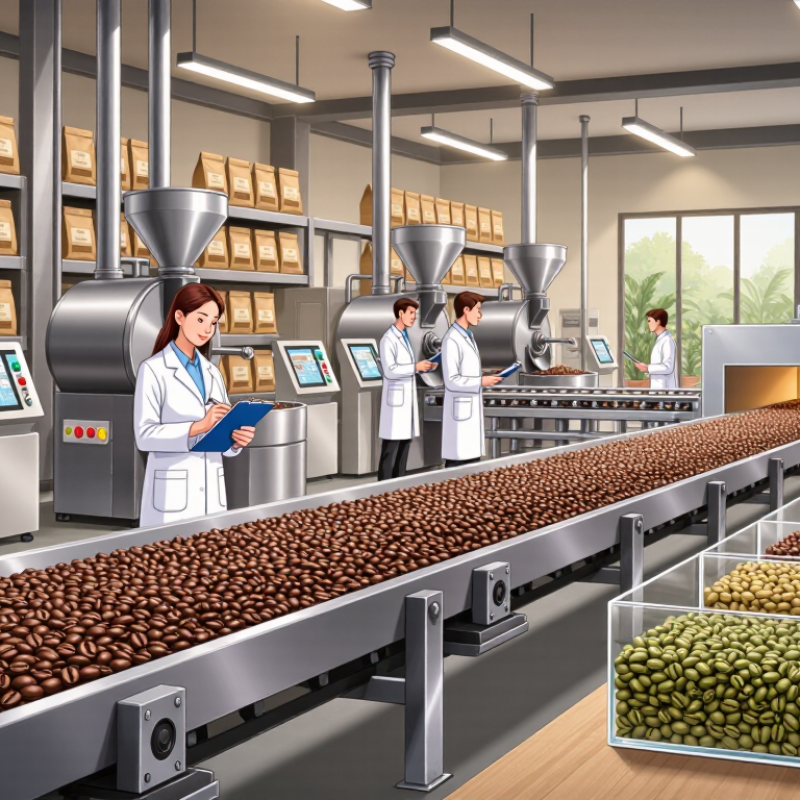
China’s high-quality coffee suppliers are professional companies that source, process, roast, package, and export coffee under controlled standards. Their role extends beyond selling beans. They connect farms, processors, logistics providers, and international buyers through documented quality procedures.
In practical work, reliable suppliers inspect bean size, moisture, defects, and drying conditions. They may use moisture meters, sample roasting, and cupping records before confirming a shipment. Clear lot numbers help buyers trace coffee back to a region, harvest period, or processing facility. This information supports consistent purchasing and reduces avoidable disputes.
Good suppliers also adapt products for different markets. They can discuss roast profiles, packaging barriers, container loading, labeling, and delivery schedules in technical detail. Experienced teams usually provide pre-shipment samples and written specifications. Small details matter.
Still, “high quality” is not a permanent label. Seasonal weather, storage conditions, and changing crop volumes can affect results. A polished sample may not fully represent a large production lot. Buyers should verify records, request independent testing when necessary, and compare samples over time. Some suppliers may communicate confidently but lack stable inspection systems. That gap deserves attention. Reliable cooperation develops through transparent evidence, realistic tolerances, and repeated performance rather than attractive claims alone.
Key Criteria for Evaluating Chinese Coffee Suppliers
When selecting among China’s top coffee suppliers, global buyers should evaluate evidence, not polished catalogues. The International Coffee Organization estimated world coffee consumption at about 177 million 60-kilogram bags in 2022/23. This scale increases pressure on consistency, documentation, and delivery discipline.
Check the supplier’s processing experience, roasting controls, and traceability system. Ask for batch records, origin details, roast dates, moisture results, and recent certificates of analysis. A serious supplier should explain how it controls temperature, grinding size, packaging seals, and storage humidity. ISO 22000 or HACCP-based systems can support food-safety confidence, but certificates require verification. The United Nations Industrial Development Organization stresses that traceability and quality controls strengthen food supply chains. Request an audit or live factory video. Small details matter.
Production capacity also needs testing. USDA data projected global coffee production at approximately 170 million bags in 2023/24, showing a highly competitive and volatile market. Compare sample quality across several batches, not one impressive shipment. Review defect rates, lead times, minimum order quantities, and responses to complaints. A supplier promising everything may deserve caution. No scorecard is perfect. I would leave room for seasonal variation, port delays, and honest production limits. Payment terms, export documents, packaging performance, and third-party inspection should be confirmed before signing.
China’s Top 10 Coffee Suppliers for International Buyers
China’s Top 10 Coffee Suppliers for International Buyers should be assessed beyond price. The International Coffee Organization reported global coffee consumption of about 177.9 million 60-kilogram bags in 2022/23. This demand pressures suppliers to offer stable quality, clear traceability, and reliable shipment planning. For overseas buyers, the strongest candidates usually provide green beans, roasted coffee, instant formats, or private-label production under documented food-safety systems.
USDA Foreign Agricultural Service data estimated China’s coffee production at roughly 1.8 million bags in 2024/25, while imports remained much higher. This gap creates opportunities for Chinese suppliers with strong sourcing networks and modern processing lines. Buyers should request recent lot samples, moisture results, defect counts, pesticide testing, and certificates of analysis. Factory audits also reveal details that brochures hide. Ask about packaging thickness, warehouse humidity, loading records, and backup ports.
The top ten should not be judged by export volume alone. A smaller supplier may control roasting more carefully. Another may struggle during peak seasons. That matters. The Specialty Coffee Association emphasizes measurable quality, sensory evaluation, and transparent processing information across the supply chain. Still, no supplier list is perfect. Crop variation, shipping delays, and inconsistent sample preparation can distort comparisons. Experienced buyers should test multiple lots before signing long-term contracts and confirm whether stated capacity reflects actual monthly output.
Product Categories, Certifications, and Quality Standards
China Top 10 High Quality Coffee Suppliers for Global Buyers
Leading Chinese coffee suppliers usually offer green beans, roasted beans, instant coffee, capsules, and ready-to-drink products. Buyers can also request single-origin lots, blends, decaffeinated beans, or customized roast profiles. Product categories matter because each format needs different controls. Green beans require moisture and defect checks. Roasted coffee needs monitoring for roast color, aroma, and packaging oxygen levels.
Reliable suppliers should provide traceable origin records, batch numbers, laboratory reports, and clear storage information. Useful certifications may include ISO 22000, HACCP, BRCGS, organic certification, and fair-trade credentials. Certification alone is not enough. Buyers should check the certificate scope, issuing body, expiry date, and covered facility. A warehouse certificate cannot automatically prove factory quality.
Quality testing should include moisture, water activity, pesticide residues, mycotoxins, microbiological safety, and sensory evaluation. Cupping notes should identify sweetness, acidity, body, defects, and aftertaste. Samples often reveal more than sales documents. Ask for pre-shipment samples and compare them with the approved reference batch. Coffee quality can shift during harvest. That point is easy to overlook. Even experienced buyers may overtrust attractive packaging or confident claims. Independent testing remains useful when contracts involve large volumes or strict import requirements.
Import, Communication, and Supplier Selection Considerations
China Top 10 High Quality Coffee Suppliers for Global Buyers
Import, Communication, and Supplier Selection Considerations
China’s coffee supply market is expanding, but buyer verification remains essential. The USDA’s December 2024 report forecast global coffee production at 174.9 million 60-kilogram bags for 2024/25. This scale increases sourcing choices, yet quality can vary between suppliers. Request green-bean samples, roasting profiles, moisture records, defect counts, and recent batch photographs. The Specialty Coffee Association commonly references 8–12.5% moisture for green coffee, but contract specifications should control.
Communication affects import performance as much as product quality. Ask suppliers to confirm Incoterms, packaging materials, lead times, port options, certificates, and customs documents in writing. One unclear sentence can create expensive delays. A shared specification sheet helps. It should include origin, processing method, screen size, harvest period, allowable defects, and delivery tolerance. Buyers should also test email response times before signing. Fast replies are useful, but detailed replies are more reliable.
Supplier selection should combine samples, factory evidence, third-party inspection, and payment safeguards. The International Coffee Organization’s monthly market reports show frequent price movement, so quotations need validity periods and adjustment clauses. Compare landed cost, not only the factory price. Video meetings are helpful, though they cannot replace physical inspection. I would recheck every certificate. Mistakes happen, even in polished documents. A small pilot order can expose weak packaging, inconsistent grading, or poor communication before a larger commitment.