
What Are the Top Types of Robot Coffee Machines?

Robot Coffee is moving from trade-show novelty into cafés, hotels, offices, and busy transport hubs. The opportunity is practical: customers want a consistent drink without a long queue. Yet “robot coffee machine” describes several different systems, not one standard design.

The National Coffee Association’s 2024 National Coffee Data Trends report found that 67% of U.S. adults had consumed coffee in the previous day, the highest share in its survey’s 20-year history. That figure shows strong coffee demand, not proven demand for robotic machines. The International Federation of Robotics reported 205,000 professional service robots sold worldwide in 2023, a 30% increase from 2022. Its broad category includes many industries, so it should not be read as a coffee-machine sales estimate.

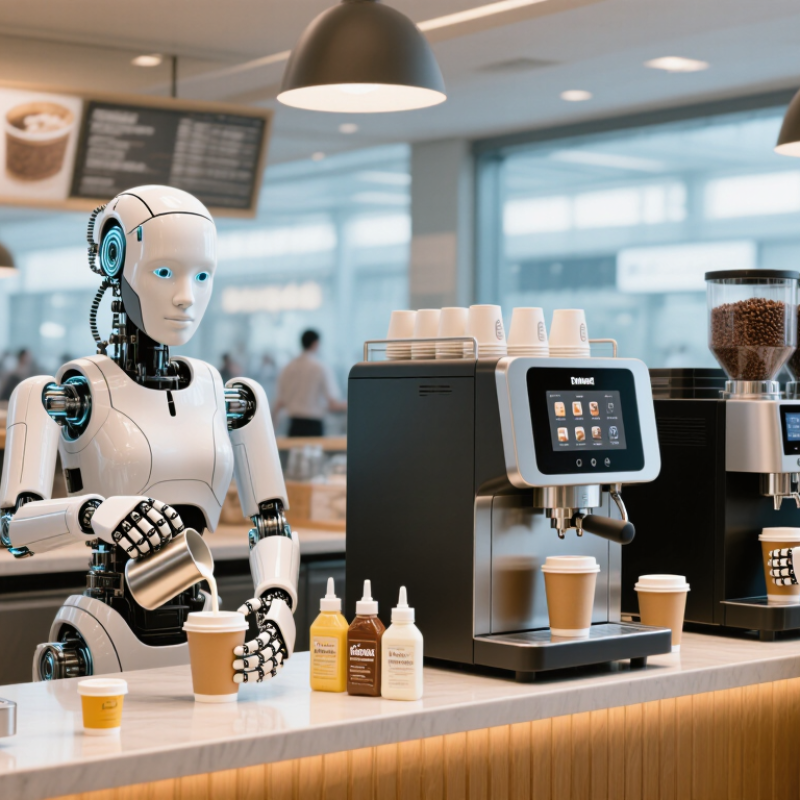
In this guide, the main types include automatic bean-to-cup machines, robotic-arm baristas, self-service coffee kiosks, and hybrid systems that combine automation with staff oversight. Their differences become clear at the counter: one machine grinds beans and pours espresso; another moves a mechanical arm between cups, milk, and syrups. Some prioritize speed. Others create a visible show. Small details matter, too—cup placement, milk cleaning, and how quickly staff can refill beans. No machine removes every operational problem. A robot can still pause when a cup shifts or an ingredient runs low. The following overview compares how each type works, where it fits, and what buyers should check before investing.
What Are the Top Types of Robot Coffee Machines?

Fully Automated Bean-to-Cup Robot Coffee Machines

Fully automated bean-to-cup robot coffee machines combine a grinder, brewer, milk system, and cup handling in one workflow. After a user selects a drink, the machine doses beans, grinds them, tamps the grounds, and extracts espresso. Some models also texture milk and position cups automatically. Sensors can check cup position, water level, temperature, and brewing pressure. Automation reduces repeated manual steps, but it does not make every cup identical. Bean age, roast level, humidity, and water chemistry still affect extraction.

In a busy café or office, a robotic unit can prepare drinks while staff handle service and cleaning. Practical details matter: how quickly it rinses milk lines, how easily grounds can be emptied, and whether recipes suit different cup sizes. Look for clear maintenance prompts and accessible parts, not just a long menu. That matters. A machine that makes smooth foam but is difficult to clean may lose time over a full shift. Automated systems still need calibration and human checks; sensors can miss a blocked spout or an unusual grind. Their strength is dependable repetition, while people remain responsible for taste, hygiene, and the occasional imperfect shot.

Capsule-Based Robot Coffee Machines

Capsule-based robot coffee machines use pre-portioned coffee capsules to simplify each drink. A robotic mechanism can select a capsule, move it into the brewing chamber, and start extraction with limited user input. The sealed portion helps keep dosing consistent, which is useful in busy offices or shared kitchens.

Less guesswork.

Users can often choose a drink size or strength through a screen, while sensors check whether key parts are in place.

Convenience still depends on the machine’s design. Capsule shape, material, and brew settings affect water flow and extraction, so not every capsule works in every system. A practical machine should make loading clear, provide access to the used-capsule container, and allow routine cleaning around the brewing unit.

Look for clear prompts when the water tank is low or a capsule is stuck. These details matter more than a flashy robotic arm.

There is a trade-off: pre-portioned coffee reduces measuring, but it also limits control over grind and dose. And the waste adds up. Check how capsules can be disposed of locally, and consider whether the machine’s convenience fits your daily routine.

Robotic Espresso Machines with Automated Milk Systems

What Are the Top Types of Robot Coffee Machines?

Robotic Espresso Machines with Automated Milk Systems

Robotic espresso machines combine grinding, dosing, brewing, and milk preparation in one programmed workflow. An automated milk system draws milk from a chilled container, heats it, and delivers foam to the cup. Sensors can monitor temperature and flow, helping keep drinks more consistent during busy periods. Milk is less forgiving. Residue can build up in narrow tubes, so automatic rinsing and clear cleaning alerts matter as much as espresso quality. The system still needs regular human checks.

Tips: Confirm the machine has a reliable milk-circuit cleaning cycle. Keep milk chilled, inspect connectors daily, and test foam texture across different cup sizes. Small details count.

Demand helps explain the appeal, but not every statistic measures robot coffee machines directly. The National Coffee Association’s 2024 National Coffee Data Trends report found that 67% of U.S. adults had coffee in the past day. Separately, the International Federation of Robotics reported about 205,000 professional service robots sold worldwide in 2023, up 30% year over year. These figures indicate broad coffee demand and wider service-robot adoption—not guaranteed sales for automated espresso systems. A machine can save staff time, yet maintenance may be more demanding than expected. That trade-off deserves a real-world trial.

Robotic Pour-Over and Drip Coffee Machines

Robotic pour-over and drip machines automate the small choices that shape a cup: water temperature, flow rate, bloom time, and brew duration. A pour-over robot moves a shower head across the grounds in timed pulses, much like a careful hand brewer. A robotic drip machine usually follows a fixed recipe, sending heated water through a basket into a carafe. That’s the appeal. The National Coffee Association’s 2024 National Coffee Data Trends report found that 67% of U.S. adults had coffee the previous day. That figure signals broad demand for coffee, not adoption of coffee robots.

Pour-over systems can adjust pouring patterns for different recipes, while drip systems suit repeatable batches and busy counters. A sensor may detect water temperature or the amount brewed, but it cannot reliably correct stale beans or an uneven grind. Cleaning also matters: oils left in a shower head can dull the next cup. Small inconsistencies remain, and that is worth admitting. Automation improves repeatability, but it does not guarantee better flavor.

Tips: Weigh the beans and water, keep the grind consistent, and rinse removable parts daily. Test one variable at a time; changing several settings makes results harder to judge.

What Are the Top Types of Robot Coffee Machines? - Robotic Pour-Over and Drip Coffee Machines

Machine Type How It Works Typical Batch Size Main Automation Features Best Suited For Practical Considerations
Robotic single-cup pour-over A controlled hot-water stream is poured over ground coffee in a dripper, usually in several stages. One cup at a time Automated water dosing, pour pattern, flow rate, and brew timing; some systems also control water temperature. Users who want repeatable pour-over coffee with less manual pouring. Grind size, coffee dose, filter, and dripper shape still affect extraction. The coffee bed and dripper generally need cleaning after use.
Robotic multi-cup pour-over A programmable pouring mechanism brews a larger quantity in a shared dripper or coordinated brewing setup. Several cups, depending on the brewer and recipe Repeatable water distribution, timed pouring stages, and recipe-based control. Small offices, cafés, or households serving multiple people who prefer pour-over-style brewing. Larger doses can require adjustments to pouring and grind settings to maintain even extraction. Capacity varies by design.
Programmable automatic drip machine Heated water is distributed over ground coffee in a filter basket and drains into a carafe or serving vessel. Typically multiple cups per cycle; capacity varies by model Automatic heating, timed brewing, measured water delivery, and—in some models—scheduled start or adjustable brew settings. Homes and workplaces that need convenient, repeatable batch coffee. A warming plate may change coffee flavor if coffee is held for a long time. Regular cleaning helps prevent mineral scale and residue buildup.
Single-serve automatic drip brewer The machine heats and dispenses a measured amount of water through a small filter basket into a cup or travel mug. One serving per cycle Automated water heating and dispensing, with serving-size controls on some designs. Individuals, compact kitchens, and settings where different servings are brewed at different times. Brew strength depends on the coffee dose and water volume. Check cup clearance and whether the brewer uses a reusable or disposable filter.
Hybrid robotic pour-over and drip brewer Combines programmable water delivery with a filter-based brewing chamber, aiming to automate pour-over-style control while supporting repeatable brewing. One serving or a small batch, depending on the design May automate staged pouring, water volume, temperature, and brew time through stored or adjustable recipes. Users seeking more control than basic drip brewing without manually pouring each stage. Features and capacity differ widely. Automation improves repeatability but does not remove the need to choose suitable coffee, grind size, and dose.
Capacities and automation features vary by machine; the descriptions above summarize common design characteristics rather than specifications for a particular model.

Commercial Robotic Barista Systems

Commercial robotic barista systems generally fall into three formats: robotic-arm stations, enclosed self-service kiosks, and hybrid counter setups. An arm-based station can move cups beneath grinders, espresso heads, and milk dispensers with repeatable timing. Enclosed kiosks often combine ordering, payment, brewing, and pickup in one compact footprint. Hybrid systems automate drink preparation while staff handle questions, restocking, and unusual orders. The right type depends on customer volume, menu size, and available floor space.

Consistency matters. A well-configured system can repeat measured doses and programmed extraction times, but it still needs trained oversight. Staff must clean milk lines, refill beans, check sensors, and respond when a cup shifts or an ingredient runs low. That takes real time. Operators should review service access, cleaning routines, and peak-hour output before choosing a machine. A busy station may produce drinks quickly yet create a bottleneck at the pickup shelf. There is no perfect setup; even good automation can feel impersonal if customers cannot get help.

Tips: Test the machine with your actual menu and cup sizes. Watch a full rush period, not just a polished demonstration. Ask who handles daily cleaning and repairs, and keep a manual service plan for outages. Small details count: a clear pickup area and readable order screen can prevent confusion.

What Are the Top Types of Robot Coffee Machines?

Commercial robotic barista systems automate different parts of drink preparation and service.

The scores count typical integrated functions across six stages: grinding and dosing, brewing, milk preparation, cup handling, payment, and cleaning. This is an illustrative comparison, not market-share data; features vary by system and configuration.

REQUEST FOR PORPOSAL

Bring the essence of Current to your space! Whether you envision a cozy coffee kiosk, a stylish window café, a dynamic coffee bar, or a multi-station coffee drive-through, the possibilities are endless.  Please fill out the form below to submit your proposal request. Our team will review your information and get back to you shortly.