What Is a Ceramic Cartridge?
A ceramic cartridge is the working heart of many modern faucets. Inside its compact housing, two carefully finished ceramic discs slide against each other. Their openings align to control water flow and temperature. A small handle movement can change the stream at the spout. The design has few moving parts, but fit and surface quality matter. Grit, scale, or a damaged seal can still cause trouble. Simple does not mean failure-proof.
Ceramic Cartridges are often discussed as durable alternatives to older compression-style mechanisms. Yet cartridge life depends on water quality, installation, and use, not material alone. For context, the U.S. Environmental Protection Agency’s WaterSense faucet specification sets a maximum flow rate of 1.5 gallons per minute for labeled bathroom faucets, compared with the federal standard of 2.2 gallons per minute. This performance benchmark concerns water use, not cartridge lifespan. That distinction is easy to miss. A faucet can meet a flow target and still develop a leak or stiff handle. This guide explains what a ceramic cartridge is, how its discs work, and what to check when choosing or replacing one. The details are small, but they affect daily use. I should also be careful: product claims about “lifetime” performance are not a substitute for test data or a clear warranty.
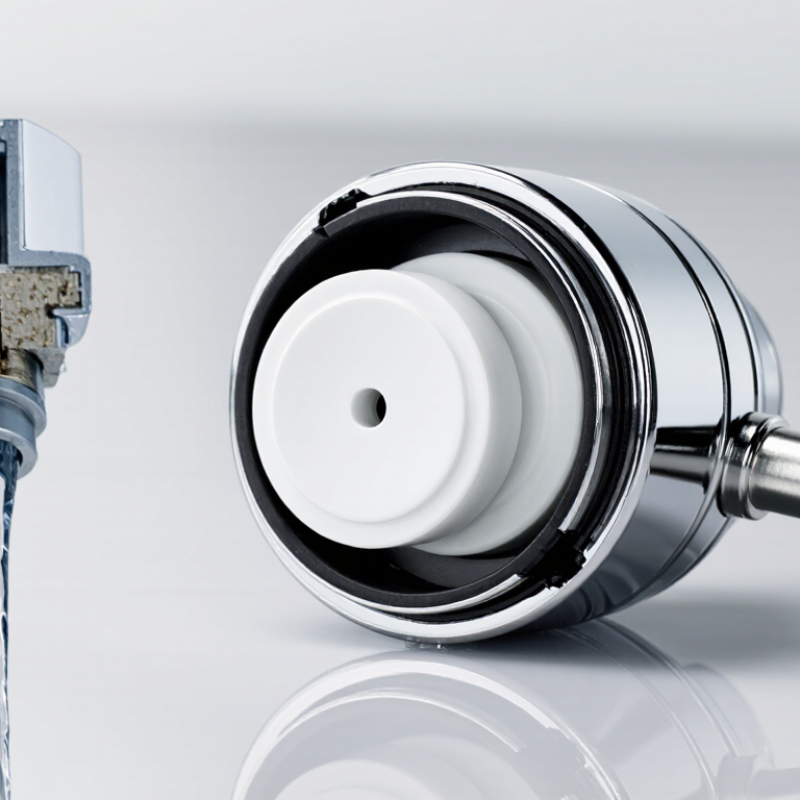
Definition and Core Purpose of a Ceramic Cartridge
A ceramic cartridge is the working valve inside many faucets and mixers. It uses two precisely finished ceramic discs, often stacked together. Moving the handle shifts their openings: aligned ports allow water through, while overlapping surfaces restrict or stop flow. In a single-handle faucet, that movement also blends hot and cold water. The cartridge’s core purpose is controlled flow and dependable shutoff, not filtration. It does not make water cleaner.
The EPA WaterSense program estimates that household leaks waste nearly 1 trillion gallons of water annually in the United States. That figure covers many leak sources, not ceramic cartridges alone, but a worn valve can contribute to a persistent drip.
Small detail.
Ceramic discs resist wear, yet grit or damaged seals can still impair closure. In practical terms, a handle that feels stiff, leaks after shutoff, or changes temperature unevenly may signal cartridge trouble, though other faucet parts can cause similar symptoms. Cartridge shapes and dimensions vary, so replacement requires matching the original assembly. It is not maintenance-free. That part is easy to oversimplify: ceramic describes the sliding valve surfaces, while seals and surrounding components still affect performance.
Key Components and Materials
A ceramic cartridge is the working assembly inside many single-handle faucets. It controls water flow and temperature as the handle moves. Its central parts are usually two flat ceramic discs, often made from aluminum oxide. One disc stays fixed; the other slides or rotates against it. Their openings line up to let water pass, then shift apart to restrict it. The surfaces are ground smooth and fitted closely. That precision matters.
The discs sit inside a cartridge body, commonly made from plastic or metal. A stem connects the moving disc to the faucet handle, while small seals help prevent leaks around the assembly. These seals are often elastomers, such as rubber-like materials. In some designs, screens or flow passages also help manage incoming water. Small parts, real consequences. Grit can score a disc or interfere with the seal, so clean installation and suitable filtration can help protect the mechanism.
Material choices involve trade-offs. Ceramic resists wear well, but it is hard and can chip if struck or stressed. A metal body may feel robust; a polymer body can reduce cost and weight. Neither detail alone guarantees long service. Fit, water conditions, seal quality, and manufacturing tolerances all matter. It is easy to credit the ceramic discs for everything, though the seals often determine whether a cartridge stays drip-free. I would avoid judging a cartridge by appearance alone.
How the Cartridge Controls Water Flow and Temperature
A ceramic cartridge controls water by moving two hard, finely finished discs against each other. In a single-handle faucet, lifting the handle opens the passage; turning it shifts the openings toward hot or cold supply. The overlap determines flow. Small movement. Quiet control. Not magic. A slight change in handle position can noticeably alter the stream, especially when household pressure varies.
The U.S. EPA’s WaterSense specification sets a maximum bathroom-faucet flow rate of 1.5 gallons per minute at 60 psi. That figure describes the faucet’s tested output, not a guarantee that every cartridge delivers the same flow in every home. Temperature depends on how the cartridge blends incoming hot and cold water, plus supply pressure and heater settings.
The U.S. Consumer Product Safety Commission advises setting water heaters to 120°F to reduce scald risk; a faucet cartridge is not a substitute for that precaution. Over time, mineral deposits or worn seals can make the handle stiff, cause drips, or complicate fine adjustment.
I used to think a smooth handle meant the cartridge was healthy. Not always. A faucet may feel normal while its internal sealing surfaces are beginning to wear.
Common Types and Where They Are Used
A ceramic cartridge uses two precisely finished ceramic discs to regulate water flow. As the handle moves, openings in the discs align or separate. This changes the flow and, in mixing faucets, the water temperature. Small parts matter.
Single-handle cartridges combine flow and temperature control in one unit. They are common in kitchen and bathroom faucets, where one lever moves smoothly from cold to hot. Two-handle faucets often use a separate cartridge beneath each handle. Quarter-turn ceramic valves are another common type, opening or closing with a short turn. In showers and baths, cartridges control mixing and flow; some thermostatic models help maintain a chosen temperature. Designs vary, so cartridges are not always interchangeable.
Hard-water grit can affect moving parts, even when the ceramic surfaces are durable. A drip does not automatically mean the cartridge itself has failed; worn seals or debris may also be responsible. It is easy to blame the most visible part. That can be wrong. In practical maintenance, identifying the faucet’s cartridge style before replacing anything helps avoid buying an incompatible part.
What Is a Ceramic Cartridge? Common Types and Where They Are Used
Ceramic-disc cartridges use closely fitting ceramic plates to start, stop, and regulate water flow. Single-lever and paired two-handle versions are common in faucets. Shower valves may instead use pressure-balancing or thermostatic cartridges to help manage changes in water pressure or temperature. These functions are typical, and not every pressure-balancing or thermostatic cartridge uses ceramic discs. In the chart, 1 means the function is typically provided; 0 means it is not the cartridge’s primary function.
Wear, Maintenance, and Replacement Signs
A ceramic cartridge controls water flow and temperature inside many single-handle faucets. It uses closely fitted ceramic discs that slide against each other as the handle moves. The surfaces are hard, but they are not invulnerable. Fine grit or mineral deposits can interfere with their seal. That matters.
Routine care can reduce unnecessary wear. Wipe the faucet dry to limit mineral buildup, especially around the handle and base. If water pressure drops after plumbing work, debris may be caught inside the cartridge. Turn off the water supply before inspecting or removing parts, and follow the faucet’s instructions. Avoid forcing a stiff handle; extra pressure can damage components. Still, it is easy to blame the cartridge too quickly. A clogged aerator or worn seal can produce similar symptoms.
Watch for water that keeps dripping after the handle is fully closed, a handle that catches or feels unusually loose, or leaks around the handle. Sudden temperature swings may also point to a cartridge problem, though other plumbing issues can cause them. Small clues count. If cleaning accessible parts does not help, or the same symptoms return, replacement may be practical. Match the replacement to the faucet’s exact model and cartridge dimensions; similar-looking parts are not always interchangeable.