

How to Choose Barista Cups for Your Coffee Business?

Choosing Barista Cups is not a cosmetic decision. It influences heat retention, aroma, balance, comfort, and the customer’s final impression. The National Coffee Association’s Spring 2024 National Coffee Data Trends report found that 67% of American adults drank coffee within the previous day. That demand raises a practical question: can your cupware protect the quality customers already expect?

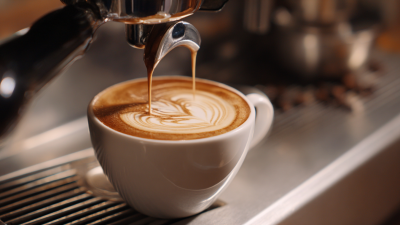
Coffee educator and author Scott Rao offers a useful principle: “The cup should not get in the way of the coffee.” The exact shape matters. A narrow rim may concentrate aroma, while a wider opening can support cooling and tasting. Thick porcelain holds heat beside a busy espresso machine. Double-wall glass displays a layered latte, but it can feel fragile during a morning rush. Small details become visible quickly. A hot handle. A sharp rim. A cup that stains after three washes.

Market growth adds pressure. World Coffee Portal’s Project Café USA 2024 report recorded more than 40,000 branded coffee-shop outlets in the United States. Competition is crowded. Consistent service can become a quiet advantage. Yet expensive Barista Cups will not automatically improve a weak recipe or poor workflow.

The perfect cup does not exist. That assumption needs questioning. Operators should compare capacity, thermal behavior, stacking space, dishwasher durability, and replacement cost. They should also test each cup with real espresso, milk, and different serving temperatures. A cup that looks elegant on a showroom shelf may fail beside a crowded bar. The right choice connects sensory performance with everyday experience, without sacrificing speed, safety, or the character of your coffee.
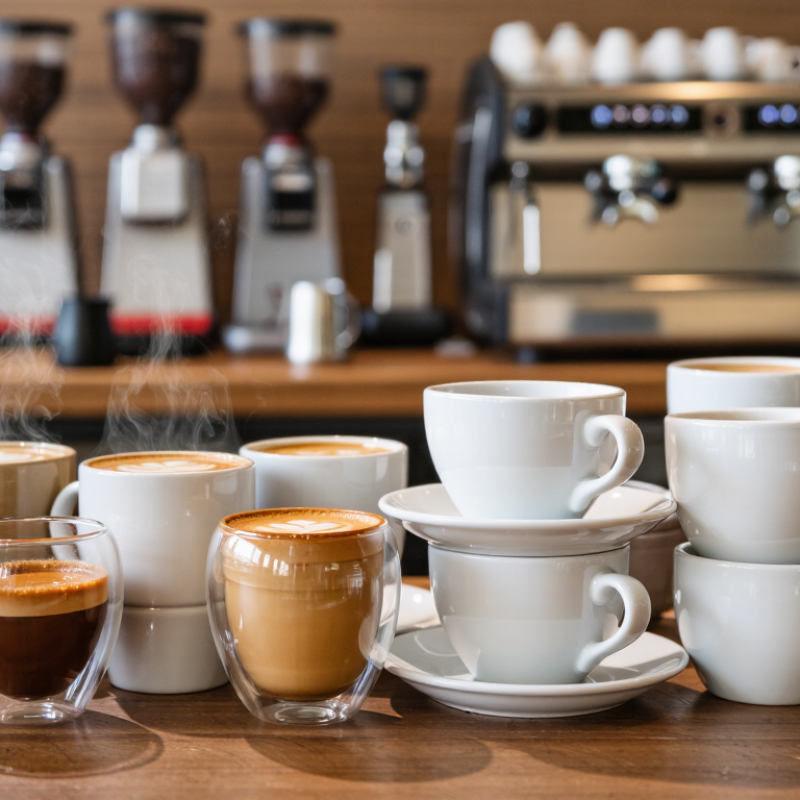
How to Choose Barista Cups for Your Coffee Business?

Define Cup Capacity Around SCA Espresso Standards: 25–35 g Beverage Yield

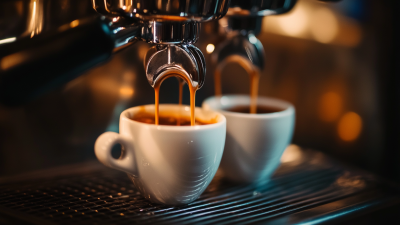
Choosing barista cups starts with beverage yield, not appearance. The Specialty Coffee Association’s Espresso Beverage Standard places the finished espresso at 25–35 g. That is roughly 25–35 ml, depending on crema and coffee density. A cup that matches this range preserves aroma and gives crema enough space. It also reduces the visual problem of a small drink sitting in a large vessel.

For a 25–35 g espresso, a 60–90 ml cup often provides practical headspace. Choose a wider opening for aroma evaluation, or a narrower shape for better heat retention. The cup should feel balanced in one hand, with a rim that supports clean sipping. The SCA Coffee Standards recommend measuring beverage mass, so staff should weigh output during training. Volume alone can mislead. Crema changes the visible level.

This matters at scale. The National Coffee Association’s Spring 2024 National Coffee Data Trends report found that 67% of American adults drank coffee during the previous day. More daily coffee occasions create more expectations for consistency. Still, the “ideal” cup is not universal. Thick ceramic may protect heat but hide the drink’s color. A very small cup may look refined but spill easily during service. Test both with real shots, real trays, and wet hands. The first choice may still be wrong. Recheck it after a busy week.

Match Cup Sizes to Brewing Methods and the SCA’s 90.5–96°C Water Range

Choosing barista cups starts with the brewing method, not the artwork. In busy cafés, I have seen oversized cups make espresso look thin and cool quickly. A 60–90 ml cup suits a single espresso and supports stable crema. For a double espresso, 90–120 ml leaves room for aroma and gentle swirling. Smaller is not always better.

Filter coffee needs more volume. A 200–300 ml cup fits many single servings, while larger brews may need 300–400 ml. The cup should leave headspace, so guests can lift it without spilling. Material changes the experience. Thick ceramic holds heat longer, but it can hide subtle temperature changes during tasting. Thin porcelain feels precise, though it cools faster. I prefer testing cups with the same recipe, grind, dose, and brew water. This keeps comparisons fair. Real service is messier than a tasting bench.

The SCA’s commonly cited brewing water range is 90.5–96°C. Cup choice should support, not replace, temperature control. Preheat cups for hot espresso and filter service, especially in cold rooms. A cold cup can pull heat from the first sip. Measure temperature at the coffee bed, not only inside the kettle. I once blamed a cup for flat flavor when the grinder produced too many fines. That mistake still matters. Check heat retention, rim comfort, stackability, and cleaning speed during a full service. A beautiful cup that slows staff is not practical.

Select Food-Contact Materials Compliant with FDA 21 CFR and EU 1935/2004

Choosing barista cups involves more than shape, insulation, or shelf appeal.
The rim touches coffee, lips, milk foam, and cleaning chemicals. Identify every food-contact surface before purchasing. Ask for the exact material, temperature range, and repeated-use conditions. A cup suitable for cold drinks may fail with boiling coffee. That detail matters.

For the US market, request evidence that the materials meet applicable FDA 21 CFR requirements. The correct section depends on the material, coating, adhesive, colorant, and use conditions. In Europe, check conformity with Regulation (EC) No 1935/2004. Suitable migration testing and traceability should support that claim. A supplier declaration must match the actual cup. Generic paperwork is a warning sign. Read it carefully.

During café use, inspect rims, printed areas, handles, and inner coatings. Look for odors, stains, cracks, peeling, or dishwasher damage. Keep batch records and cleaning instructions with your purchasing files. Test samples with hot coffee and milk drinks before placing a large order. It is tempting to focus on appearance and overlook the lid or glaze. That shortcut can fail. Compliance concerns the complete article, not only its main body. If documents remain unclear, pause the purchase and ask precise questions. A cheaper cup may create higher costs through waste, complaints, or product withdrawal.

Test Heat Retention, Rim Comfort, and Durability for Commercial Dishwashing

Choosing barista cups for a coffee business requires more than attractive shapes. Heat retention affects flavor, workflow, and customer comfort. The Specialty Coffee Association recommends brewing water near 92–96°C, but the cup must protect that quality without becoming dangerously hot. Test filled cups after five, fifteen, and thirty minutes. Record temperature with a calibrated probe. A cup that loses heat quickly may create complaints during busy service.

Rim comfort deserves equal attention.

Hold the cup with wet hands, then drink from several positions around the rim. Check for sharp edges, drips, and awkward thickness. Small flaws become obvious after hundreds of daily uses. I would not trust a single showroom sip. Staff should test cups during real service, including takeaway transfers and tray carrying. That evidence is more useful than appearance alone.

Commercial dishwashing is harsher than home cleaning.

The FDA Food Code 2022 specifies final rinse temperatures of about 74–82°C, depending on machine type. Repeated thermal shock can expose weak glazing, hairline cracks, or fading decoration. Run sample cups through at least 100 wash cycles, then inspect the rim, handle, and base under bright light. ASTM durability tests can support evaluation, but they cannot fully copy every café’s detergent and loading pattern. That limitation matters. Choose cups that remain stable, comfortable, and intact after imperfect daily handling.

Compare Lifetime Cost Using Reuse Rates, Breakage Data, and Unit Pricing

How to Choose Barista Cups for Your Coffee Business?

Unit price rarely shows the real cost of a barista cup. A $4 ceramic cup may outperform a $1.20 cup if it survives longer. Calculate cost per served drink: purchase price divided by successful uses, then add washing, storage, and replacement costs. The Ellen MacArthur Foundation’s reuse guidance notes that high return rates are essential for reusable packaging economics. That principle also applies behind a coffee counter.

Track each cup type for six months. Record daily use, dishwasher cycles, chips, cracks, losses, and replacements.

For example, 600 cups costing $2,400 may produce 72,000 servings after 120 uses each. The base cost becomes $0.033 per serving. If breakage reaches 8%, add replacement spending and recalculate. Small errors matter.

WRAP’s reusable packaging research emphasizes return systems, cleaning, and repeated use as major performance factors. Use those categories when comparing ceramic, tempered glass, and reinforced polymer cups. A durable cup is not automatically cheaper if staff reject it, customers take it, or racks damage its rims. Measure reality, not catalogue promises. My own cost reviews often underestimated loss during busy weekends. That weakness deserves a separate allowance, perhaps 5% to 10%. Compare unit price, expected reuse rate, observed breakage, and labor together before changing your cup range.

REQUEST FOR PORPOSAL

Bring the essence of Current to your space! Whether you envision a cozy coffee kiosk, a stylish window café, a dynamic coffee bar, or a multi-station coffee drive-through, the possibilities are endless.  Please fill out the form below to submit your proposal request. Our team will review your information and get back to you shortly.