


How to Choose a Coffee Bar Supplier in 2026?
Choosing a Coffee Bar supplier in 2026 is not just a price comparison. It is a decision about what customers taste, how smoothly staff work, and whether daily service holds up during the morning rush. The National Coffee Association’s 2024 National Coffee Data Trends report found that 67% of American adults had consumed coffee in the past day. That demand makes consistency matter. A late milk delivery, a grinder that needs constant adjustment, or cups that run out before noon can disrupt an otherwise strong operation.
Supplier choices also sit within a changing global market. The USDA’s Coffee: World Markets and Trade reports track production, exports, consumption, and stocks across major coffee-producing countries. Those figures offer useful context, but they cannot predict every cost change or local delivery problem. A report is not a guarantee. Buyers still need to check recent quotes, delivery terms, product availability, and the supplier’s record with businesses like theirs.
This guide explains how to assess suppliers across coffee, equipment, consumables, logistics, and after-sales support. Ask for samples and test them using your own recipes and equipment. Check whether service staff can respond when a machine fails during a busy shift. Small details count. There is no perfect scorecard, and a polished sales pitch can hide practical gaps. The best choice is usually the partner whose quality, communication, and backup plans fit your actual workload—not simply the lowest quote.
Define Your Coffee Bar’s Equipment and Supply Requirements
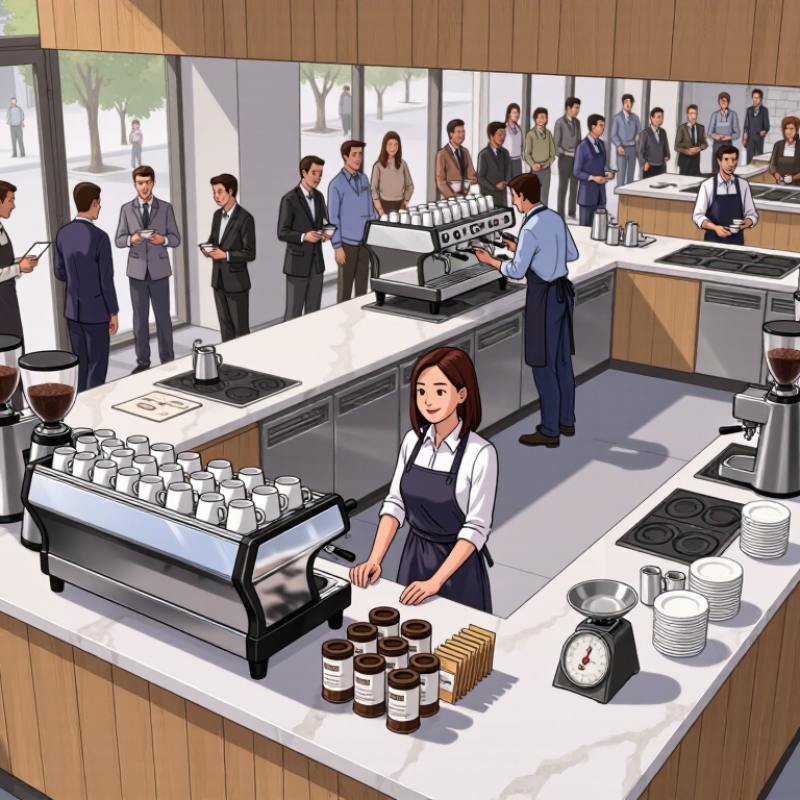
Before comparing suppliers, map the work your coffee bar must handle. Record expected drinks per hour, peak periods, menu size, and available counter space. Measure carefully; a few centimetres can affect workflow. List essential equipment, such as an espresso machine, grinders, water filtration, refrigeration, and a batch brewer. Add smaller items too: scales, pitchers, knock boxes, and cleaning tools.
Estimate demand using real service patterns, not just daily sales. A bar serving 60 drinks during a busy hour needs different grinder capacity and backup stock than a quiet café. Include beans, milk, cups, lids, syrups, filters, and takeaway packaging. Note storage limits and delivery frequency. Your first estimate will probably be wrong. Treat it as a working draft, then revise it after tracking a week of orders.
Check practical requirements before requesting quotes: electrical capacity, water connections, drainage, ventilation, installation, and staff training. Ask suppliers for equipment dimensions, maintenance schedules, warranty terms, and replacement-part lead times. Confirm whether consumables arrive in quantities your storage area can handle. A low purchase price may not reflect service delays or ongoing costs. Keep a simple equipment-and-supply sheet, and flag uncertain figures rather than disguising them as exact forecasts.
How to Choose a Coffee Bar Supplier in 2026? — Define Your Coffee Bar’s Equipment and Supply Requirements
Use this planning guide to describe your expected menu, service volume, space, and replenishment needs before comparing suppliers. Quantities are illustrative starting points for a small-to-medium café and should be adjusted to local demand and operating conditions.
| Requirement Area | Equipment or Supply | Planning Specification | Illustrative Starting Quantity | Supplier Questions |
|---|---|---|---|---|
| Coffee preparation | Espresso machine | Choose the number of groups and boiler capacity to suit peak-hour drink volume, available counter space, and electrical or plumbing requirements. | 1 machine; commonly 2 groups for a busy small café | What installation, water-treatment, warranty, and service arrangements are required? |
| Coffee preparation | Espresso grinder | Match grinder capacity and adjustment range to the espresso menu; consider a separate grinder if offering decaffeinated espresso. | 1 primary grinder; optional 1 decaf grinder | Are replacement burrs available, and what maintenance is recommended? |
| Coffee preparation | Batch-brew coffee maker and grinder | Specify batch size and brew rate based on expected filter-coffee demand and how often fresh coffee can be brewed. | 1 brewer and 1 dedicated grinder, if filter coffee is on the menu | Are compatible brew baskets, servers, and cleaning products available? |
| Water and utilities | Water filtration system | Size the system for the machine’s flow rate and local water conditions; confirm cartridge-change intervals and pressure requirements. | 1 system sized to the installed equipment | Can the supplier provide water testing, filter specifications, and replacement cartridges? |
| Milk service | Refrigerated milk storage | Plan capacity for forecast milk use while maintaining safe refrigeration temperatures and access during service. | 1 under-counter refrigerator or equivalent | What are the unit dimensions, ventilation clearances, and delivery lead time? |
| Bar tools | Scales, tampers, pitchers, and knock box | Choose durable, food-contact-suitable tools that fit the espresso workflow and are easy to clean. | 2 espresso scales, 2–4 milk pitchers, 1 tamper per group, 1 knock box | Are replacement parts and additional matching tools available? |
| Core ingredients | Whole-bean coffee | Estimate weekly use from expected drinks, recipe dose, and operating days; specify roast style, packaging size, and delivery frequency. | Set an opening stock from the projected sales plan; reorder before stock reaches the agreed safety level | What are the order minimums, shelf-life guidance, and regular delivery days? |
| Core ingredients | Milk and non-dairy alternatives | Forecast each type separately and align order quantities with refrigerated storage, use-by dates, and menu demand. | Opening quantity based on forecast daily usage and delivery schedule | Can quantities be adjusted, and what are the delivery and handling requirements? |
| Service supplies | Cups, lids, sleeves, and takeaway carriers | List sizes by drink type and confirm cup-to-lid compatibility; choose reusable or disposable formats to meet local rules and service needs. | Opening stock based on forecast takeaway volume and replenishment lead time | Are sizes and materials clearly specified, and can products be reordered consistently? |
| Cleaning and maintenance | Espresso-machine and grinder cleaning supplies | Include products suitable for the equipment and establish a daily, weekly, and periodic cleaning routine. | One opening kit plus stock for the planned reorder cycle | Which products are compatible, and what cleaning instructions should staff follow? |
| Service continuity | Spare parts and backup items | Identify replaceable, high-impact items such as gaskets, screens, water filters, and grinder burrs. | Stock critical consumables according to supplier lead times and service support | What parts are kept in stock, and what is the typical repair response time? |
| Ordering and delivery | Supplier fulfilment plan | Document order minimums, delivery windows, cut-off times, returns policy, and procedures for urgent or out-of-stock items. | One written plan covering equipment, ingredients, and recurring supplies | Can deliveries be consolidated, tracked, and scheduled around the café’s operating hours? |
Related Posts
-
10 Best Home Coffee Bar Ideas for Every Kitchen?
-
Future Innovations Shaping the Home Coffee Bar Experience for Global Buyers
-

Ultimate Guide to Craft Coffee: Unlocking Taste, Quality, and Market Trends in 2023
-

2026 How to Brew the Perfect Robot Coffee at Home?
-

Exploring the Impact of the Best Latte Robot on Global Coffee Trends and Consumer Preferences
-
China Top Coffee Kiosk Suppliers for Global Buyers Guide?