
China Top 10 Latte Robot Suppliers for Global Buyers
China has become a major source of automated beverage equipment for cafés, hotels, offices, and convenience stores. Among these products, the Latte Robot is attracting global buyers seeking consistent milk coffee with less manual labor. Yet supplier selection requires more than comparing attractive videos or low quotations.
This guide introduces ten leading China Latte Robot suppliers for international buyers. It considers manufacturing experience, product engineering, customization capacity, export support, and after-sales service. Practical details matter. Buyers should examine brewing temperature, milk texture, cup compatibility, cleaning procedures, daily output, and installation requirements. A machine producing smooth foam at 65°C may suit one café, but not every operating environment.
Evidence matters.
The evaluation also considers certifications, factory quality systems, spare-parts availability, software stability, and response times during maintenance. Reliable suppliers should provide clear specifications, testing records, user training, and realistic delivery commitments. Independent factory checks and sample trials remain valuable before any large order.
No ranking is perfect. Supplier capabilities can change, and online information may not show the full customer experience. Some manufacturers may have stronger hardware, while others offer better software or regional support. This guide therefore encourages careful comparison rather than blind trust. Global buyers can use these insights to identify suitable partners, reduce purchasing risks, and assess whether a Latte Robot can perform reliably in their specific market. The final decision should reflect real operating conditions, not marketing claims alone.
What Is a Latte Robot and How Does It Work?
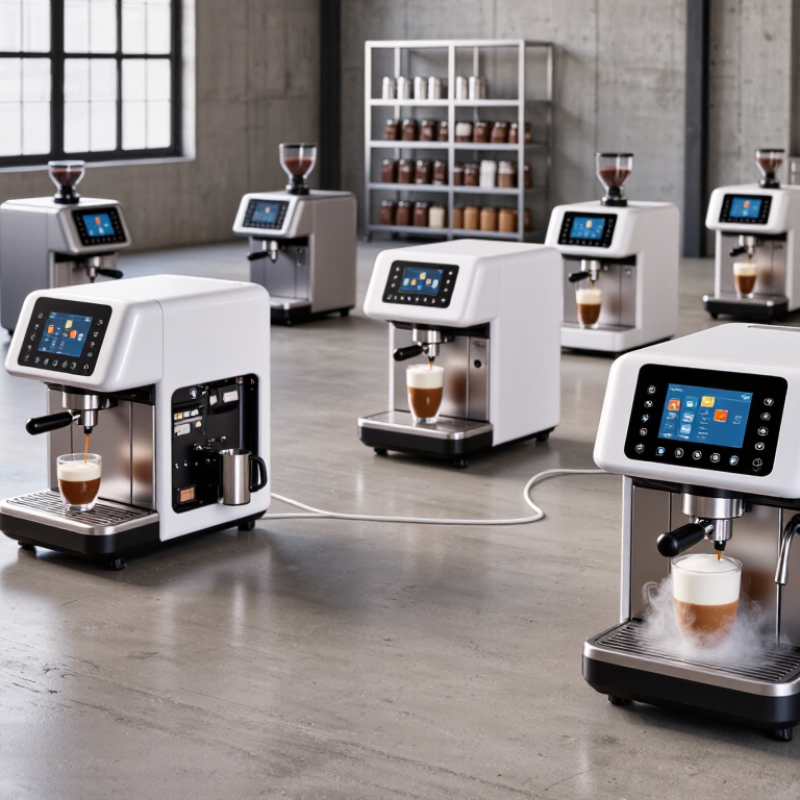
A latte robot is a compact automated beverage system designed to prepare milk-based coffee drinks with repeatable movements. It usually combines a coffee brewer, milk dispenser, cup sensor, robotic arm, and control software. The customer selects a recipe on a screen. The system grinds or receives coffee, extracts espresso, heats or foams milk, then positions the cup under each station.
The process looks simple, but calibration matters. A sensor checks cup placement, while software controls temperature, volume, and pouring speed. Milk temperature commonly stays near 55–65°C, helping preserve foam without excessive scalding. According to the International Federation of Robotics’ World Robotics 2024 report, 541,302 industrial robots were installed worldwide in 2023. That figure shows the wider automation trend, although café robots require different safety and hygiene controls. The National Coffee Association’s 2024 data also reported that 67% of American adults drank coffee within the past day, supporting demand for faster service.
For global buyers, the practical questions are less glamorous. Can staff clean the milk lines quickly? Does the machine record temperature and maintenance data? Can it handle local cup sizes and recipes? A robot may produce consistent foam, yet it cannot fully replace good ingredient management. Some systems still need human refilling and inspection. That limitation matters. A perfect demonstration does not guarantee reliable service during a crowded morning. Testing throughput, cleaning time, energy use, and after-sales support remains essential before purchase.
How to Evaluate China’s Latte Robot Suppliers
Evaluating China’s latte robot suppliers requires more than comparing catalog prices. A reliable buyer should inspect production records, quality controls, and export experience. Ask for traceable component lists and recent test reports. Check whether food-contact materials meet the destination market’s requirements. Request clear evidence, not polished promises.
Arrange a live machine demonstration. Watch the robot prepare several drinks during busy periods. Measure serving time, temperature consistency, foam quality, cleaning effort, and noise. Ask how it handles an empty cup, blocked nozzle, or interrupted payment. Small failures reveal operational maturity. A supplier should explain safety controls, software updates, warranty coverage, and spare-parts availability in writing.
Talk with reference customers in similar climates and business settings. Their feedback may reveal installation delays or training gaps. Compare the full ownership cost, including shipping, commissioning, maintenance, energy use, and consumables. A low quotation can become expensive after deployment. I have found that remote support sounds efficient, but response times matter more than attractive service language. Request a pilot order with defined acceptance criteria. Keep records of every change. No checklist is perfect. Even experienced buyers can overvalue appearance and underestimate daily cleaning.
China Top 10 Latte Robot Suppliers for Global Buyers - How to Evaluate China’s Latte Robot Suppliers
| No. | Evaluation Dimension | Buyer-Verifiable Benchmark | Evidence to Request | Suggested Weight |
|---|---|---|---|---|
| 1 | Latte Robot Product Fit | The system should support the required beverage types, cup sizes, milk options, syrup recipes, and dispensing sequence. | Technical datasheet, recipe list, cup-size chart, and live or recorded beverage demonstrations. | 15% |
| 2 | Automation Level | Confirm which steps are automated, including cup handling, coffee extraction, milk dispensing, topping, lid placement, and cleaning. | Process-flow diagram, operating video, manual-intervention list, and cycle-time test. | 12% |
| 3 | Output Capacity | Compare peak-hour throughput under the same recipe, cup, ingredient, and staffing conditions rather than relying only on laboratory figures. | Factory acceptance-test report showing drinks per hour, recovery time, and queue-handling performance. | 12% |
| 4 | Food-Contact Safety | All liquid-contact components should be identified, removable where necessary, and suitable for the destination market’s food-contact requirements. | Material declarations, food-contact test reports, tubing specifications, and cleaning instructions. | 10% |
| 5 | Safety and Regulatory Compliance | The supplier should provide documentation applicable to the destination market, including machinery, electrical, EMC, and safeguarding requirements. | Declaration of conformity, risk assessment, electrical schematics, test reports, and safety-device list. | 10% |
| 6 | Cleaning and Hygiene Design | Evaluate automatic rinse cycles, milk-line sanitation, drainage design, cleaning-agent compatibility, and the daily cleaning workload. | Daily and weekly cleaning schedules, sanitation SOP, cleaning-cycle duration, and consumables list. | 10% |
| 7 | Customization and Software | Check recipe editing, multilingual interfaces, remote monitoring, user permissions, payment integration, and data-export capability. | Software demonstration, API documentation, connectivity requirements, cybersecurity policy, and update process. | 8% |
| 8 | Installation and Site Requirements | Compare footprint, power supply, water connection, drainage, ventilation, ambient conditions, and required clearance. | Site-preparation drawing, utility schedule, installation manual, packing dimensions, and commissioning plan. | 8% |
| 9 | Service, Spare Parts, and Warranty | Assess warranty coverage, remote diagnostics, spare-parts availability, technician training, and response-time commitments. | Warranty terms, service-level agreement, spare-parts catalog, troubleshooting guide, and reference installations. | 8% |
| 10 | Total Cost of Ownership | Calculate equipment price, shipping, duties, installation, consumables, maintenance, software fees, energy use, and expected replacement parts. | Formal quotation, Incoterms, payment schedule, operating-cost estimate, consumables pricing, and five-year cost model. | 7% |
Scoring method: Score each supplier from 1 to 5 for every dimension, multiply by the suggested weight, and verify all claims through technical documents, sample testing, factory audits, and customer references before making a purchasing decision.
China’s Top 10 Latte Robot Suppliers for Global Buyers
China’s Top 10 Latte Robot Suppliers for Global Buyers are attracting attention from cafés, hotels, airports, and unattended retail operators. These suppliers typically provide robotic coffee stations, automated milk systems, cup handling units, and remote monitoring software. Their solutions can produce espresso drinks with repeatable pouring patterns and limited staff intervention.
Global buyers should assess more than a polished demonstration. A practical review should include factory experience, production capacity, food-contact materials, software stability, and service response times. Ask suppliers to prepare samples using your preferred coffee beans, milk, cup sizes, and syrup recipes. Check whether the robot maintains a steady milk temperature and completes each order within a realistic service window. Small details matter.
Documentation is equally important. Reliable suppliers should provide technical drawings, maintenance schedules, electrical specifications, and market-specific compliance documents. Installation training and spare-part availability can reduce downtime after deployment. Still, no supplier is perfect. Some systems may struggle with cleaning routines, unusual cup shapes, or unstable network connections. Buyers should request a pilot test before placing a large order. A ten-supplier comparison is useful, but field performance deserves more trust than impressive sales language.
China’s Top 10 Latte Robot Suppliers for Global Buyers
Buyer evaluation framework for comparing latte robot suppliers without displaying company or brand-level data. The percentages represent recommended procurement priorities based on operational, technical, compliance, and export requirements.
Automation capability and beverage consistency receive the highest weights because they directly influence labor efficiency, service speed, and customer experience. Food safety, customization, service support, and export readiness are also essential when assessing suppliers for international deployment.
Key Differences in Features, Pricing, and Customization
China Top 10 Latte Robot Suppliers for Global Buyers
Comparing China’s top 10 latte robot suppliers requires more than checking product photos. In procurement reviews, I examine drink consistency, cleaning access, software stability, and service response. A strong machine should dose milk accurately, control foam temperature, and complete a cup within a predictable cycle. Some models offer touchscreen ordering, remote monitoring, and multiple syrup channels. Others focus on compact footprints for cafés, hotels, and office lounges. Small details matter.
Automation
Support
Pricing usually reflects hardware, automation, and support. Entry-level systems may cost about USD 8,000 to USD 15,000 before shipping and installation. Mid-range machines often include stronger pumps, larger ingredient capacity, and better telemetry. Higher-priced units can add robotic arm movement, custom interfaces, and integrated payment functions. However, a higher quote does not always mean lower operating costs. Ask for energy use, spare-part prices, warranty terms, and cleaning labor.
Customization separates practical suppliers from flexible ones. Buyers may request cup sizes, menu languages, logo-free interfaces, local voltage, or specific counter dimensions. Some suppliers modify software quickly but struggle with mechanical changes. Others build solid hardware but offer limited reporting tools. I would test sample drinks for at least one week before placing a large order. One overlooked issue is training: even a reliable robot can underperform when staff skip calibration. That part deserves more attention.
How Global Buyers Can Select and Import the Right Supplier
China Top 10 Latte Robot Suppliers for Global Buyers
Selecting a latte robot requires more than comparing catalogue prices. The International Federation of Robotics reported 541,302 industrial robot installations worldwide in 2023. This signals strong automation demand, but beverage equipment needs different checks. Request production videos, factory audit records, hourly output, cleaning procedures, and failure rates. A practical test should cover milk texture, cup positioning, temperature stability, and recovery after an error. Ask for data from real cafés, not only laboratory demonstrations. Supplier ranking matters less than evidence.
Import planning also needs careful detail. Confirm voltage, plug type, machine dimensions, packaging protection, spare-part availability, and remote support hours. Check food-contact materials and electrical compliance with the destination market. The International Trade Centre recommends using accurate product classifications and customs documentation for smoother cross-border trade. Freight, insurance, duties, installation, and staff training can change the final cost sharply. A cheap machine may become expensive after one delayed replacement part. I have seen buyers overlook water quality, which later affects pumps and cleaning cycles. That mistake is easy to repeat.
Tips: Request three commercial quotations with identical specifications. Compare total landed cost, not the factory price. Require a video acceptance test before shipment. Include response times, warranty coverage, and consumable pricing in the contract. Do not assume automatic milk cleaning means complete sanitation. Ask for written cleaning steps and local service contacts. Reports provide useful direction, but supplier evidence should decide the purchase.
Related Posts
-
2026 How to Choose a Coffee Solution for Global Buyers?
-
Discover the Ultimate Guide to Sourcing the Best Cups Barista from Top Quality Suppliers
-
Unlocking the Secrets to Creating Your Perfect Home Coffee Bar Experience
-
Top 10 Quality Coffee Suppliers for Global Buyers
-
Unveiling the Best Coffee Bar Features 12 Key Specifications You Need to Know
-
Navigating Industry Standards for the Best Barista System and Its Unique Challenges